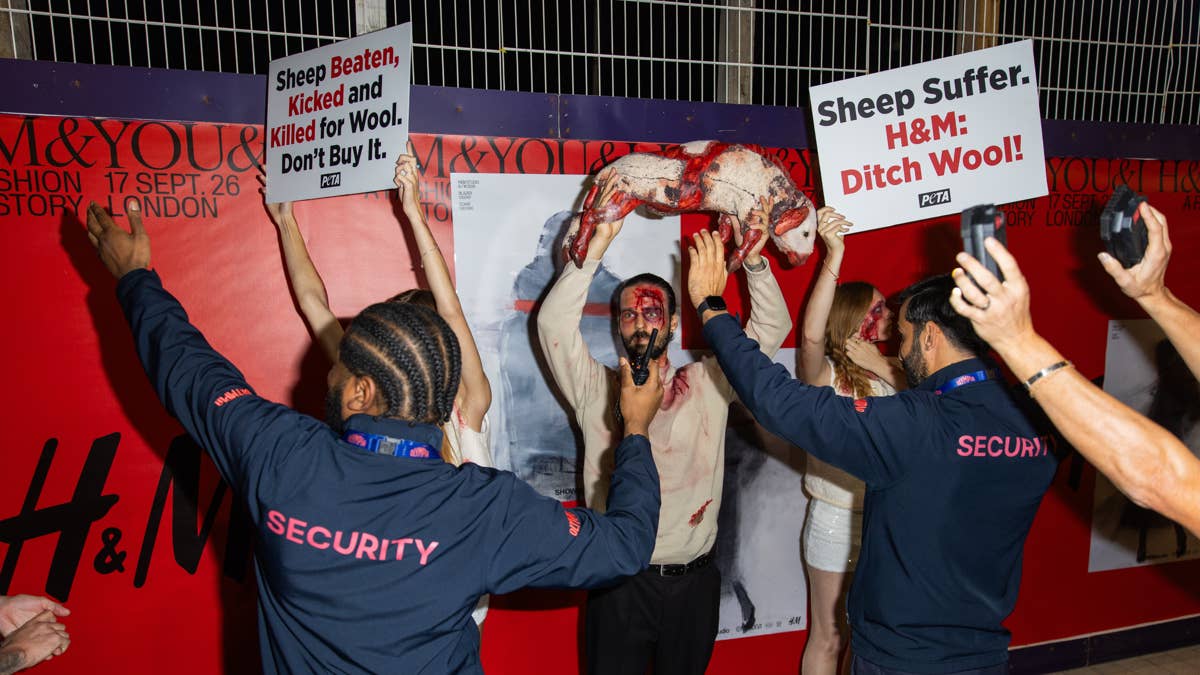
PETA activists disrupted H&M's London Fashion Week presentation this week, staging a protest against the fast-fashion retailer's use of animal materials. The environmental group targeted the Swedish brand at one of fashion's most high-profile venues, amplifying ongoing pressure on H&M to eliminate fur, leather, and other animal-derived textiles from its supply chain. H&M has faced mounting scrutiny from animal rights organizations over the past two years, despite the brand's sustainability commitments and pledges to increase recycled and synthetic alternatives.
The disruption underscores a broader reckoning across the fast-fashion sector. Major retailers face intensifying demands to reformulate their material sourcing, particularly as Gen Z consumers increasingly align purchasing decisions with ethical values. H&M's visibility as a volume player in the global fashion system makes it a frequent target for activist campaigns seeking to shift industry practices at scale.
Elsewhere in the sports-apparel sphere, Kylian Mbappé's departure from Nike to On marks a watershed moment for the Swiss running and outdoor brand's aggressive expansion into soccer. The French football superstar's multi-year deal with On elevates the performance-focused label into direct competition with Nike, Adidas, and Puma for soccer's most lucrative endorsement partnerships. Mbappé's move signals On's confidence in its product innovation and reflects broader market shifts as established athletic brands face competition from disruptive players.
On has rapidly scaled its presence in sport over the past three years, investing heavily in R&D and athlete partnerships. The brand secured its position as a credible performance innovator, particularly in running, before pivoting toward soccer's enormous global revenue pool. Mbappé's endorsement bridges that credibility gap and provides immediate mainstream visibility in markets where soccer dominates sports culture, from Europe to Latin America to Asia.
Nike's loss of Mbappé represents a rare strategic stumble for the Beaverton giant. The Swoosh has dominated soccer endorsements for decades, securing partnerships with Cristiano Ronaldo, Neymar, and other marquee players. Mbappé's exit suggests that even incumbents must continuously evolve their athlete relations and product offerings to retain top talent, particularly as athletes gain leverage in renegotiating deals.
On the luxury front, LVMH has moved to acquire shares held by an Hermès family member, marking the conglomerate's intensified push to gain control of the independent heritage brand. The transaction demonstrates LVMH's strategic focus on consolidating ownership of premium houses, particularly Hermès, which has resisted full integration into the luxury empire despite LVMH's earlier stake purchases. The share acquisition signals LVMH's determination to eventually secure boardroom control and operational influence over one of the sector's most coveted brands.
Hermès has long maintained independence through family ownership structures and tight inventory controls. LVMH's incremental approach reflects the complexities of acquiring a brand with entrenched family governance and cultural prestige. The acquisition of additional shares represents another step toward LVMH's consolidation strategy, though Hermès' founding family has historically resisted pressure to surrender operational autonomy.
These three developments intersect at a critical moment for fashion and sports business. Activist pressure on fast-fashion sustainability, disruption in athletic sponsorships, and consolidation in the luxury sector all reflect fundamental shifts in how brands build value, retain talent, and manage stakeholder expectations in an era of heightened scrutiny and competitive intensity.