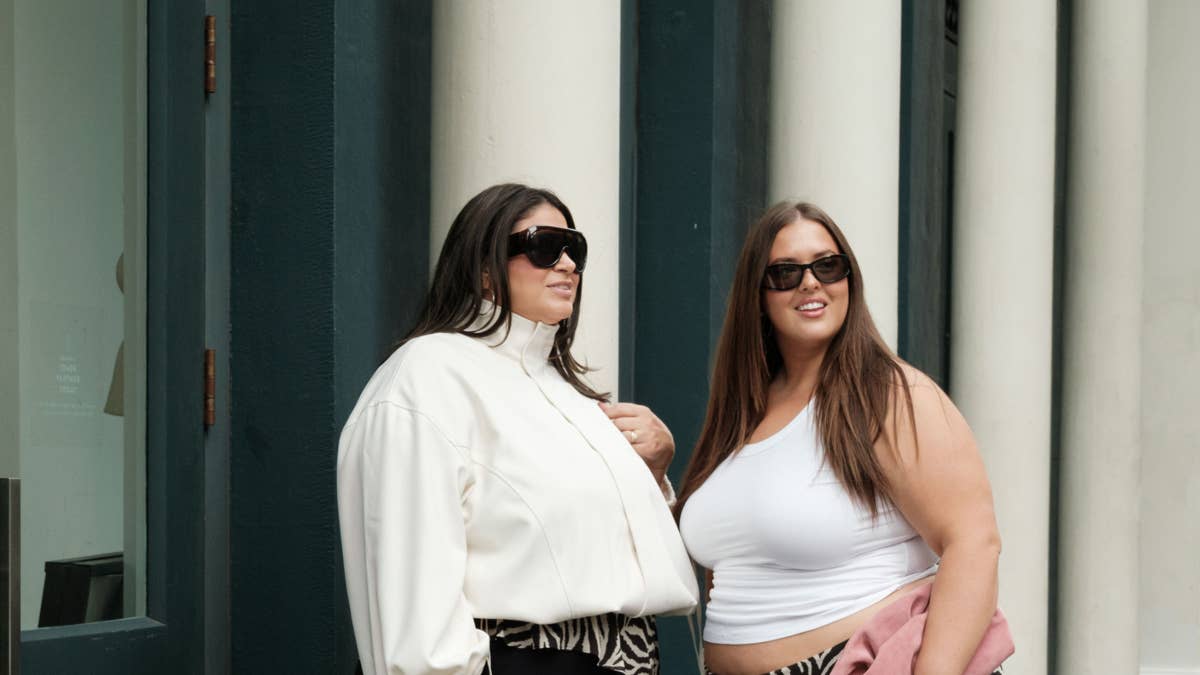
Gia Sinatra's brand Gia/irl enters a market segment that has long suffered from aesthetic compromise. The founder built her label on a straightforward premise: plus-size women deserve the same trend-forward designs and risk-taking silhouettes that straight-size fashion celebrates. Her collaboration with model and content creator Emma Arletta proves the brand's commitment to that mission while expanding its reach into the creator economy.
The collection Sinatra and Arletta developed together champions a particular sensibility. These are not safe, conservative pieces stretched to larger sizes. Instead, Gia/irl delivers trend-led cuts, bold proportions, and experimental details that reflect what's happening on runways and in street style. The brand refuses the tired narrative that plus-size fashion must prioritize coverage or conservative aesthetics over personality and edge.
This positioning matters within the broader retail landscape. The plus-size market represents billions in annual spending, yet major fashion houses have historically treated it as an afterthought or assigned it to separate, lower-investment lines. Brands that do take the segment seriously often rely on outdated assumptions about what larger-bodied women actually want to wear. They lean into tunics, heavy fabrics, and muted colors rather than meeting consumers where trends actually live.
Emma Arletta brings credibility to this effort that extends beyond traditional modeling. As a content creator with substantial platform influence, she understands how her audience consumes fashion information and what resonates with them. The partnership signals that Gia/irl sees plus-size consumers as sophisticated, trend-aware, and worthy of the same creative energy that benefits smaller sizes.
The collaboration also reflects a larger industry shift toward inclusive sizing driven by demand. Gen Z and millennial consumers increasingly reject brands that fail to offer extended sizes, and they broadcast their preferences across social media. Gia/irl capitalizes on this leverage by positioning plus-size design not as an accessibility feature but as core to brand identity.
Sinatra's approach challenges the conventional economics of plus-size production. Brands typically cite grading costs and fabric quantities as reasons to limit size ranges or charge premiums for extended sizes. Gia/irl appears to have solved this calculus differently, treating size inclusivity as baseline rather than burden. This sets a template that other contemporary brands will struggle to ignore.
The Sinatra and Arletta collection launches into a retail environment where plus-size fashion increasingly commands attention from investment capital and established players alike. Luxury houses have begun taking the category seriously. Direct-to-consumer models like Gia/irl's build community faster and allow for rapid iteration on trends that traditional wholesale channels cannot match.
What distinguishes this partnership from surface-level inclusive-sizing initiatives is the uncompromising attitude toward design. These pieces don't ask plus-size wearers to adapt their preferences or settle for diluted versions of trends. The collection meets them with the same boldness and specificity that defines cutting-edge fashion across all sizes. For a segment historically underserved by major fashion, that commitment to refusing to play it safe represents genuine change.