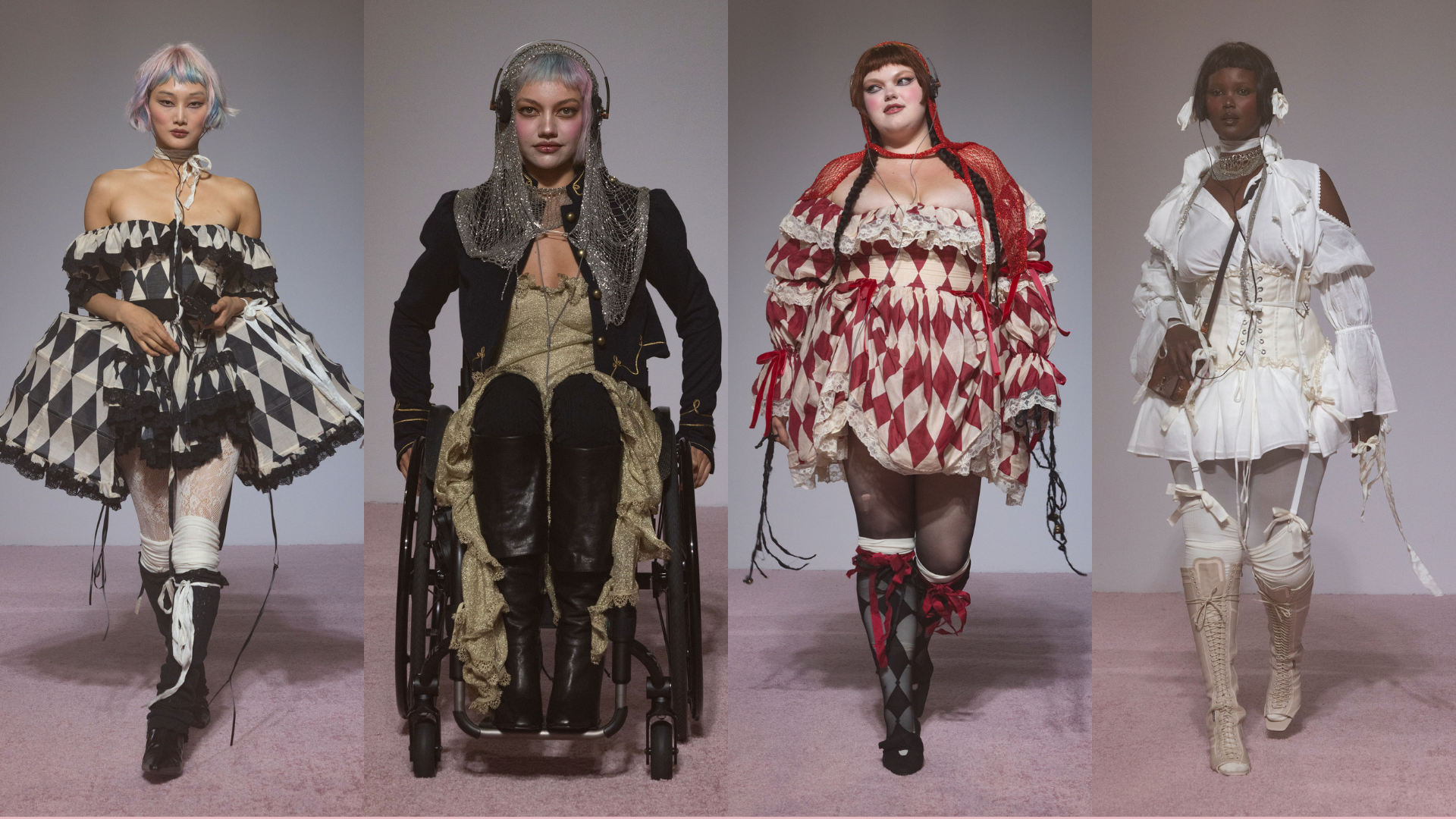
Kimberley Gordon's latest collection for Selkie pushes the Brooklyn-based brand deeper into theatrical territory with a collection that imagines a pirate circus thriving in the ruins of civilization. The designer crafted a narrative around performers discovering freedom and creative expression after societal collapse, a departure from the brand's previous work yet consistent with its maximalist ethos and commitment to escapist fashion storytelling.
Selkie built its reputation on whimsical, voluminous silhouettes that blur the line between wearable clothing and costume design. Gordon's design philosophy centers on the idea that fashion should transport the wearer into another world entirely. This new collection escalates that ambition by establishing a complete narrative universe where a troupe of circus performers operates beyond the rules of a fallen civilization. The collection presents clothing that prioritizes spectacle, movement, and character expression over conventional notions of practicality.
The pirate-circus aesthetic merges two distinct visual languages. Pirate references bring elements of rebellion and lawlessness, while circus vocabulary introduces acrobatic functionality, bold color blocking, and theatrical proportions. The combination suggests performers unbound by social conventions, creating art and finding joy in the margins. Gordon's designs feature exaggerated volumes, unexpected fabric combinations, and details that reward close examination. Selkie's signature oversized tulle and sculptural construction appear throughout, but here they serve a specific narrative purpose rather than existing as purely decorative flourishes.
Gordon has long resisted trends that emphasize minimalism or quiet luxury. Instead, she celebrates loud, unapologetic self-expression. This latest collection amplifies that voice. The post-apocalyptic framing device adds intellectual weight to designs that might otherwise read as purely decorative. By anchoring the collection in a specific dystopian scenario, Gordon elevates the work beyond fantasy cosplay into a commentary on how humans create meaning, art, and community during collapse. The apocalypse becomes a setting where surface-level social hierarchies disappear and authentic creativity flourishes.
For Selkie's customer base, typically consumers who view fashion as personal mythology-building rather than wardrobe stapling, the collection offers exactly what the brand promises. These pieces function as costume components for a life lived as a perpetual performance. The circus performers referenced in the narrative are not metaphorical. Gordon designs for actual performers, gig workers, and creative professionals who construct identity through appearance.
The collection arrives as theatrical fashion gains momentum in the broader market. Brands from Comme des Garçons to newcomers like Bode have explored costume-adjacent design. What distinguishes Selkie's approach is its commitment to narrative coherence and world-building. Gordon doesn't simply reference pirates or circuses; she constructs an entire ecosystem where these references function as a unified visual language.
The pirate-circus collection represents Selkie's maturation as a design house. While maintaining the playfulness that defines the brand, Gordon demonstrates increasing sophistication in how she integrates narrative, silhouette, and craft. The apocalyptic setting reframes maximalist fashion not as escapism but as survival, not as frivolity but as resistance against a world that demands conformity.