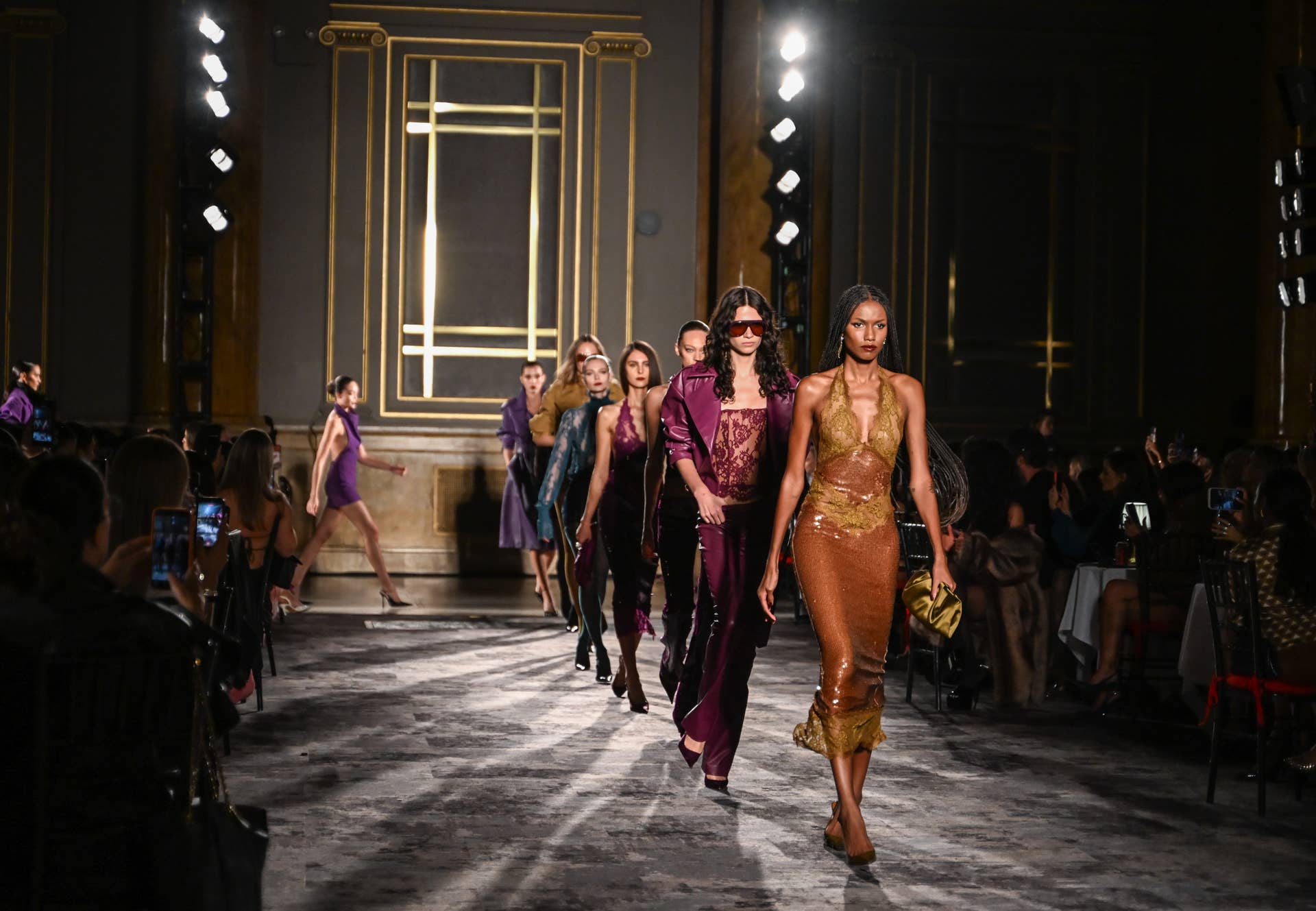
# Retrofête Returns to NYFW With Nostalgia for Grand European Interiors
Retrofête makes its New York Fashion Week comeback after an eight-year absence, and designer Ohad Seroya frames the collection around a specific visual memory. Old European hotels, with their faded grandeur and layered histories, become the inspiration for a line that mines 20th-century hospitality aesthetics for contemporary appeal.
Seroya's statement about being "in a very different place" signals a matured brand perspective. Retrofête launched as a luxury ready-to-wear house known for embellished evening wear and bold, theatrical prints. The label built its reputation on maximalist sensibility, attracting celebrities and fashion editors drawn to its unapologetic glamour. Eight years away from the official NYFW schedule represents a significant interval, during which the fashion calendar itself shifted, direct-to-consumer models gained dominance, and luxury brands reassessed their presentation strategies.
The European hotel concept speaks to contemporary fashion's broader turn toward nostalgia and curated escapism. Unlike straightforward vintage revival, hotel-inspired collections tap into a specific mood: the worn luxury of spaces designed decades ago, updated imperfectly, inhabited by strangers seeking refuge. Velvet chairs, faded damask, ornate mirrors, and layered textiles become design vocabulary. This aesthetic mirrors similar moves by other contemporary labels exploring historicity and place-based narratives in their collections.
The timing of Retrofête's return matters within NYFW's evolving ecosystem. New York Fashion Week has contracted in recent years, with major houses departing or reducing their physical presence. Independent labels like Retrofête, operating outside the official schedule during its peak years, now return to the official calendar at a moment when NYFW itself holds different cultural weight. The decision to participate suggests confidence in the event's utility for brand storytelling, even as designers increasingly control their own narrative through digital channels and private presentations.
Retrofête's archive reveals a house comfortable with pattern saturation, bold color, and unapologetic femininity. That DNA likely persists within the hotel-derived visual framework. The collection probably channels European maximalism through contemporary fabrication and silhouette innovation, rather than direct copying of historical pieces. This approach aligns with how luxury brands currently balance heritage storytelling with modernity.
The European hotel setting also reflects where wealthy travelers, celebrities, and fashion insiders seek inspiration. Retrofête's audience gravitates toward experiential luxury, curated retail environments, and places that photograph well. Old European hotels embody that aesthetic: they're Instagram-friendly, loaded with narrative, and associated with refined taste. Translating that sensibility into wearable pieces requires precision, ensuring designs read as sophisticated rather than costume.
Seroya's recognition that Retrofête inhabits "a very different place" after eight years acknowledges both personal evolution and industry transformation. The brand navigates a landscape where direct-to-consumer sales matter more than wholesale placement, where influencer endorsement carries different weight than editorial validation, and where NYFW itself competes with brand presentations, digital shows, and experiential events for attention.
Retrofête's collection launch arrives as luxury fashion increasingly mines interior design and hospitality aesthetics for inspiration. The hotel concept reflects broader cultural interest in place, memory, and design history. Whether through fashion collaborations, retail experiences, or advertising campaigns, luxury brands activate these narratives to deepen customer connection and justify premium positioning.