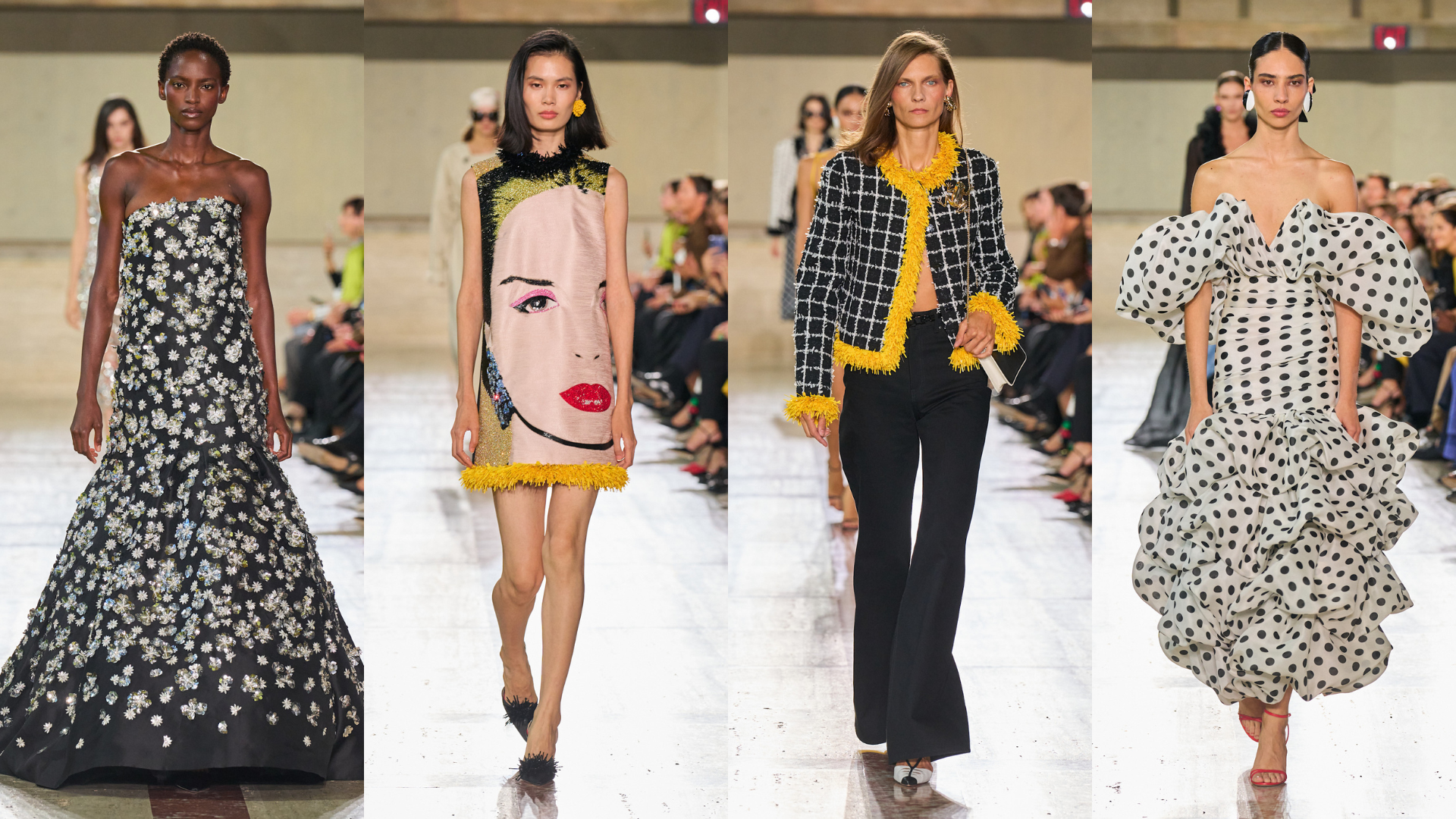
Carolina Herrera marks 45 years in fashion with a Spring 2027 collection that centers New York City, the city where founder Carolina Herrera built her fashion empire in 1981. Creative Director Wes Gordon, who has stewarded the brand since 2014, uses this milestone to honor both the city's influence on the house and Herrera herself, positioning the collection as a retrospective of the designer's impact on American luxury.
The timing reflects a broader trend in heritage fashion houses: brands increasingly lean into founder narratives and anniversary moments to strengthen emotional connection with consumers. For Carolina Herrera, this strategy carries particular weight. The brand has maintained its position as an accessible luxury powerhouse precisely because of Herrera's personal story. An aristocratic Venezuelan designer who arrived in New York with minimal English, she built her name through meticulous tailoring, impeccable proportions, and an unwavering commitment to elegance. The label's DNA centers on refined dressing for sophisticated women, a positioning that has proved remarkably durable across decades of trend cycles.
Gordon's stewardship has balanced preservation with evolution. He inherited a house known for pristine silhouettes, bold color, and timeless accessibility. Rather than radically overhaul the aesthetic, he has deepened it. His collections have expanded the brand's reach into contemporary culture while respecting Herrera's foundational principles. A 45th anniversary collection focused on New York City allows Gordon to tap into the brand's origin story without seeming retrospective or stagnant.
New York City as muse carries symbolic weight in fashion. The city shaped Herrera's vision fundamentally. She dressed Manhattan's most elegant women, drew inspiration from its architecture and energy, and built her brand during the city's creative renaissance in the 1980s. A Spring 2027 collection anchored in NYC suggests visual references to the city's iconic skyline, its diverse neighborhoods, its particular brand of sophisticated minimalism mixed with bold statement-making.
This narrative strategy arrives as luxury conglomerates increasingly scrutinize heritage brand relevance. Kering, LVMH, and Richemont all juggle portfolios of houses at different lifecycle stages. Carolina Herrera, owned by Puig since 2004, benefits from the parent company's resources while operating with relative creative autonomy under Gordon. Anniversary collections provide natural touchstones to assess brand vitality and consumer appetite for a house's story.
Gordon's comment that he serves as "caretaker of her legacy" signals something intentional. He positions himself not as a disruptor but as a guardian, a stance that has won him respect within the brand's existing customer base while opening doors to younger consumers curious about fashion heritage. The emphasis on Herrera herself, rather than solely on Gordon's creative vision, suggests humility and brand custodianship.
For Carolina Herrera specifically, the Spring 2027 collection functions as both celebration and reset. It reinforces the brand's core identity for long-standing customers while creating marketing momentum for wholesale partners and retail spaces. The collection will appear in Saks Fifth Avenue, Nordstrom, and specialty boutiques that have carried the house for decades, alongside newer digital channels and direct-to-consumer platforms that expand reach beyond traditional luxury retail.