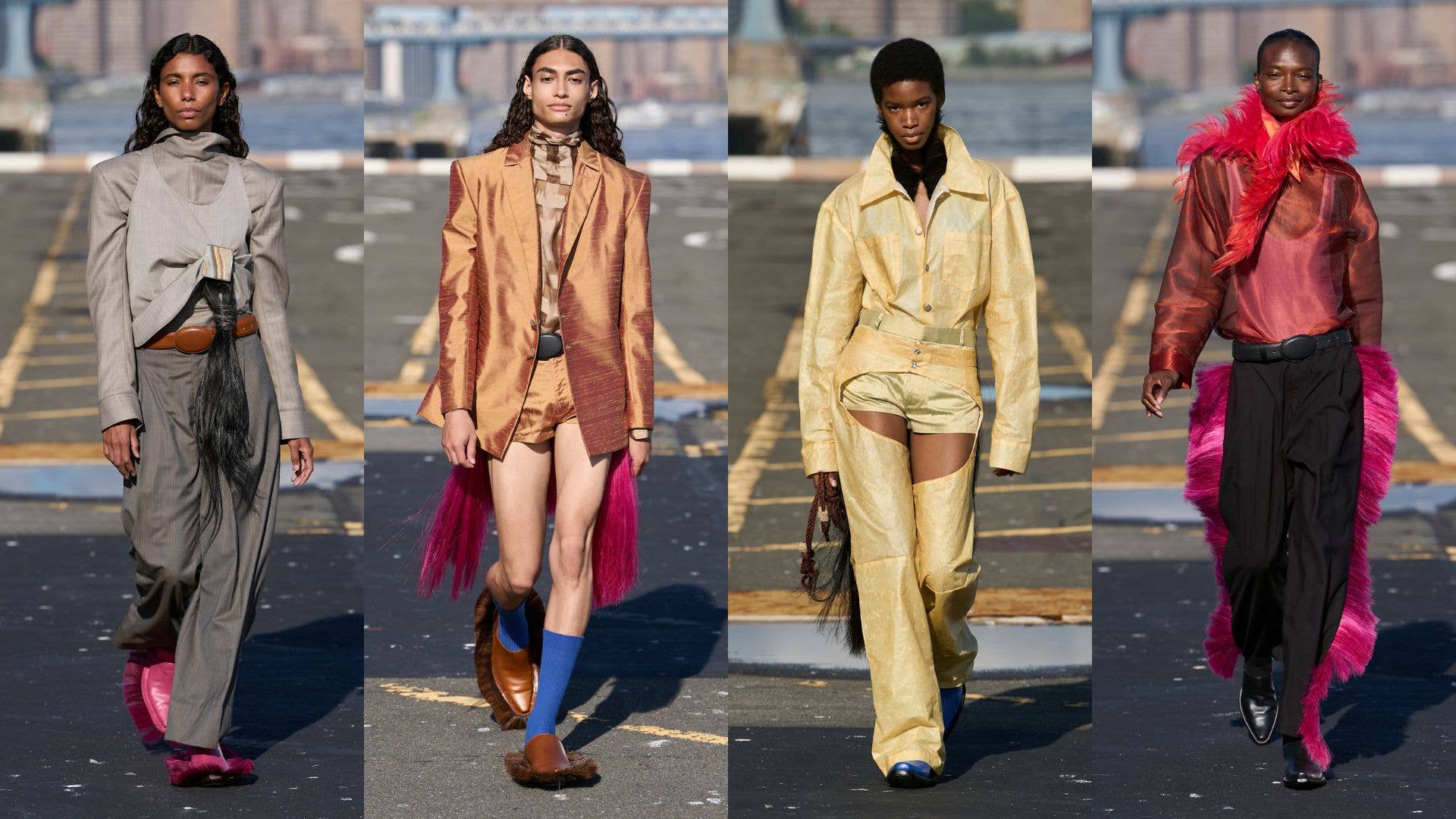
Patricio Campillo has pushed the boundaries of biotech fashion with a jacket constructed entirely from bacteria for his Spring 2027 collection, titled "In Media Res." The Spanish designer's latest work signals a radical shift in how high fashion approaches material innovation and the relationship between garment and wearer.
The bacterial fabric represents a departure from traditional textile production. Campillo engineered the material using living microorganisms, creating a biosynthetic textile that responds dynamically to body temperature, moisture, and movement. This approach aligns with growing interest in lab-grown fabrics that challenge conventional manufacturing processes while minimizing environmental waste.
"In Media Res," which translates to "in the middle of things," frames the collection around the symbiotic relationship between clothing and the human body. Rather than treating garments as static objects, Campillo positions them as living interfaces that interact with skin, sweat, and temperature fluctuations. The bacterial jacket serves as the collection's centerpiece, embodying this philosophy through a material that literally adapts to its wearer.
The collection arrives at a moment when fashion houses increasingly experiment with alternative fibers. Designers like Stella McCartney and brands such as Mylo have explored mycelium-based leather alternatives, while others investigate spider silk proteins and lab-grown collagen. Campillo's bacterial innovation places him within this vanguard but takes the concept further by using living organisms as the primary structural component rather than a supplement to conventional materials.
Campillo's work carries implications for the luxury market's sustainability narrative. High-end fashion has faced mounting pressure to address waste and environmental impact. A bacteria-based jacket theoretically offers biodegradability at end-of-life. The designer joins a cohort of artists and technologists exploring how bioengineering might solve fashion's ecological crisis while simultaneously creating novel aesthetic possibilities.
The technical achievement also raises questions about durability, care, and longevity. A living fabric requires different maintenance protocols than wool or cotton. Campillo's Spring 2027 collection presumably addresses these practical concerns, though maintaining bacterial cultures in a wearable garment presents genuine engineering challenges. The collection will reveal whether these obstacles have been solved or whether the jacket remains primarily a conceptual statement.
"In Media Res" operates within contemporary fashion's broader turn toward speculative design and scientific collaboration. Collections increasingly feature materials sourced from laboratories rather than traditional supply chains. This represents a shift in how luxury fashion defines craftsmanship, moving from hand-work and heritage techniques toward biotechnological precision and living systems.
The collection's debut will likely attract significant attention from fashion media, luxury consumers, and biotech investors. Campillo's approach demonstrates that cutting-edge fashion innovation now exists at the intersection of textile science, body politics, and environmental responsibility. Whether the bacterial jacket becomes commercially viable or remains a singular artistic gesture, it signals where luxury fashion is directing its creative and technical investments for the next decade.