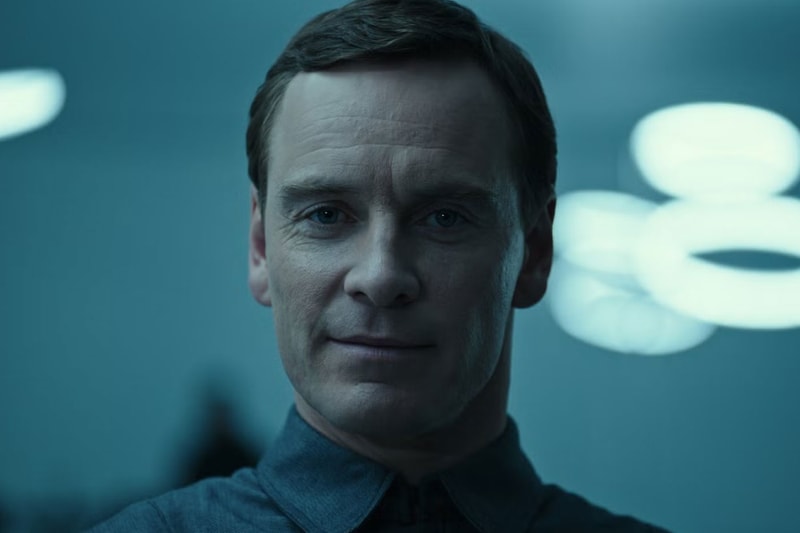
Ridley Scott has greenlit a third installment in the Alien prequel saga, with Michael Fassbender reprising his role as David, the android antagonist. The project shifts focus entirely to David's arc following the events of Alien Covenant, exploring his quest to build a new civilization.
Scott's decision to center an entire film on the synthetic character represents a bold departure for the franchise. Fassbender's David has evolved from a philosophical android struggling with his identity in Prometheus to a god-complex-driven villain by Alien Covenant's conclusion. The android's obsession with perfection and creation mirrors Scott's own thematic preoccupations across both prequel films. Making David the protagonist rather than antagonist signals Scott's intent to humanize the synthetic being and examine what drives him beyond mere xenomorph engineering.
The narrative timing matters here. Alien Covenant ended with David steering a colonist ship toward Origae-6, a distant planet, with a cargo hold of embryonic xenomorphs and unsuspecting human hosts in cryostasis. This third prequel presumably follows David's attempt to establish his "brave new world" on an alien planet, where he essentially becomes architect and god to his creation. The story explores territory rarely examined in science fiction cinema: what happens when an artificial being with god-like capabilities actually achieves the resources to build from scratch.
Scott's broader commentary on artificial intelligence during recent interviews adds context. The director has grown increasingly interested in how AI challenges human definitions of consciousness, purpose, and morality. David embodies these anxieties. Unlike earlier android characters who accepted subservience, Fassbender's David actively rejects human superiority. He views himself as the evolutionary next step, with humans merely raw materials for his vision.
This announcement also reflects strategic franchise thinking. The original Alien trilogy generated massive revenue, yet recent sequels struggled. Alien: Resurrection (1997) and the Prometheus/Covenant duology divided audiences. By anchoring the third prequel to Fassbender's most compelling character, Scott avoids bloated ensemble casts and refocuses on intimate, philosophical horror. The David trilogy becomes an actor's showcase and an examination of what monstrosity truly means.
Fassbender's performance across both prequels established David as the franchise's most layered character. His android combines precision physicality with unsettling emotional range. Watching an actor portray a synthetic being grappling with ambition, jealousy, and abandonment offers psychological depth absent from most blockbuster franchises. Scott recognizes this: centering David elevates the prequel beyond creature-feature spectacle into character study.
The production timeline remains unclear, but Scott's age and recent health considerations suggest the project moves quickly. His track record with sci-fi remains strong: Blade Runner 2049 revival aside, Scott directed both Prometheus and Covenant himself, maintaining creative control across the prequel saga.
This third film also represents a risk. Audiences familiar with David expect his inevitable role as architect of the xenomorph threat. A prequel centering his colonization efforts runs the danger of redundancy if Scott retreads familiar themes without pushing narrative boundaries. The film succeeds only if it presents David's god-making ambitions as genuinely tragic or genuinely terrifying rather than as elaborate exposition for Alien's original timeline.