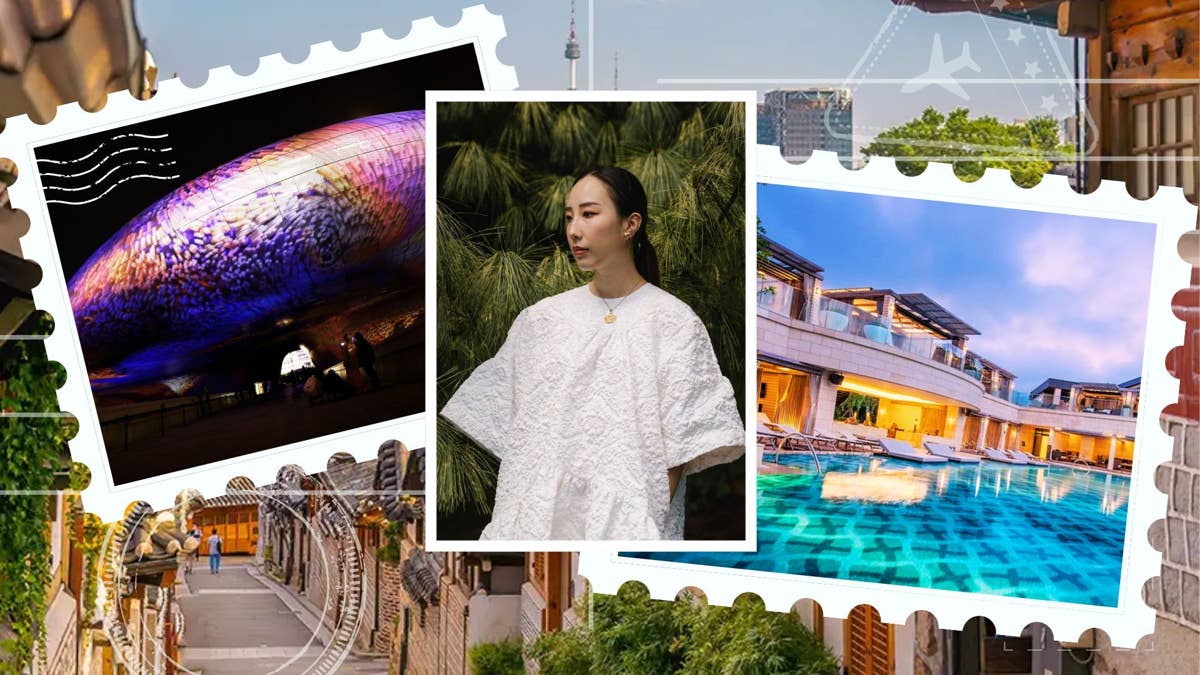
# A Stylish Person's Guide to Seoul, by Beauty Founder Erica Choi
Erica Choi, founder of the cult skincare brand Superegg, has carved out a distinct voice in the beauty industry by marrying clinical efficacy with aesthetic sensibility. Her latest contribution to fashion discourse arrives as a curated guide to Seoul, positioning the South Korean capital as far more than a K-beauty production hub. Instead, Choi reveals the city through the lens of someone who understands both its commercial machinery and its intimate cultural layers.
Choi's trajectory from esthetician to founder speaks to a broader shift in beauty entrepreneurship. Rather than relying on celebrity backing or influencer machinery, she built Superegg on direct consumer relationships and a commitment to ingredient transparency. The brand's minimalist packaging and focus on fermented actives reflects South Korean beauty philosophy without resorting to the oversaturation that plagues much of the K-beauty export market. This approach has positioned Superegg as a thinking person's skincare line within a crowded category.
Her guide to Seoul operates on similar principles. The article avoids the predictable tourist corridors and instead directs readers toward spaces that reveal how Seoul's residents actually move through their city. For a beauty founder, this means highlighting neighborhoods where indie skincare shops cluster, where dermatologists operate at the cutting edge of procedure innovation, and where the obsessive ingredient hunting that defines Seoul's beauty culture unfolds in real time.
Seoul functions as the aesthetic laboratory for global beauty trends. The city's dermatological infrastructure, advanced manufacturing capabilities, and consumer base of meticulous skincare devotees create conditions for rapid experimentation. When trends emerge in Seoul, they typically arrive in Western markets within 18 months. Choi's guide positions this not as a tourism opportunity but as a working insight into how the beauty industry actually operates.
The timing of this guide matters. As the prestige beauty market consolidates around mega-conglomerates like LVMH and Estee Lauder, independent founders like Choi remain committed to regional specificity. Seoul represents the anti-generic destination for beauty professionals. The city's beauty culture remains rooted in practical problem solving rather than marketing mythology. This distinction shapes everything from product formulation to retail experience.
For fashion and beauty journalists, Choi's perspective offers valuable context. Her guide likely maps the supply chains, laboratory networks, and ingredient suppliers that power not just Superegg but the broader beauty ecosystem. Understanding Seoul through a founder's eyes rather than a tourist's camera reveals why the city continues to drive global beauty innovation despite intense competition from other manufacturing hubs.
Choi's emergence as a guide writer also reflects the evolution of founder visibility in beauty. Founders now double as cultural commentators, taste arbiters, and travel experts. This role expansion demonstrates how personal branding has shifted from reactive coverage to proactive narrative control. Beauty founders shape not just product but entire worldviews around consumption and lifestyle.
The guide underscores Seoul's status as a city where beauty remains inseparable from daily life. Unlike Western markets where skincare occupies a discrete luxury category, Seoul treats skincare as routine infrastructure. Choi's hidden gems likely emphasize this cultural difference rather than exotic luxury positioning.