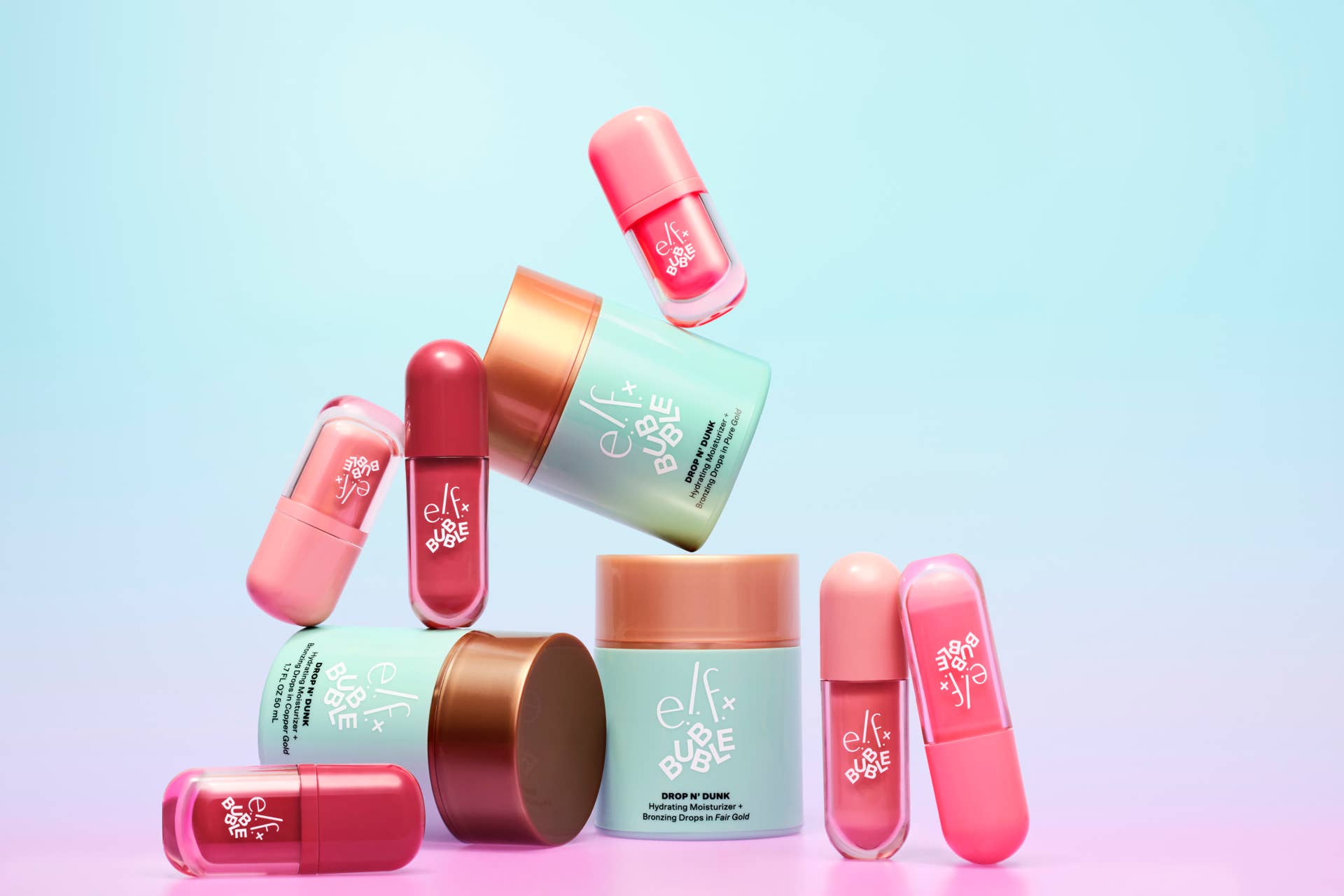
E.l.f. Beauty and Bubble have launched a limited-edition collaboration born directly from consumer behavior. Makeup enthusiasts were already mixing products from both brands to create hybrid formulas, a trend the companies decided to formalize.
The collection features curated combinations that reflect this organic "cocktailing" phenomenon. Rather than forcing a creative vision from above, E.l.f. and Bubble listened to what customers were actually doing with their products. This approach mirrors a broader industry shift toward customer-driven product development.
E.l.f. has built its reputation on democratizing beauty through affordable pricing and accessibility. Bubble brings its own cult following with specialized formulations. Together, they've created something that feels inevitable rather than imposed.
The collaboration taps into the remix culture that defines modern beauty consumption. Consumers no longer see their makeup collection as fixed items but as ingredients to experiment with. Layering serums over foundations, mixing liquid and powder products, combining different brand textures. These aren't mistakes or workarounds anymore. They're intentional techniques.
Limited-edition beauty collabs have become industry standard, but this one differs because it starts with consumer insight. E.l.f. and Bubble didn't dream up the collection in a boardroom. They formalized what was already working in bathrooms and on vanities across their customer base.
This strategy addresses a tension in beauty retail. Brands want to drive innovation and set trends, but consumers increasingly trust their own instincts. A collaboration that validates existing behavior builds loyalty faster than one that demands customers adopt something entirely new.
The timing also matters. Beauty's accessibility movement, spearheaded by E.l.f., has created a generation of makeup users unafraid to experiment. They buy multiple brands, mix freely, and share results on social media. Bubble and E.l.f. recognized this and built a product