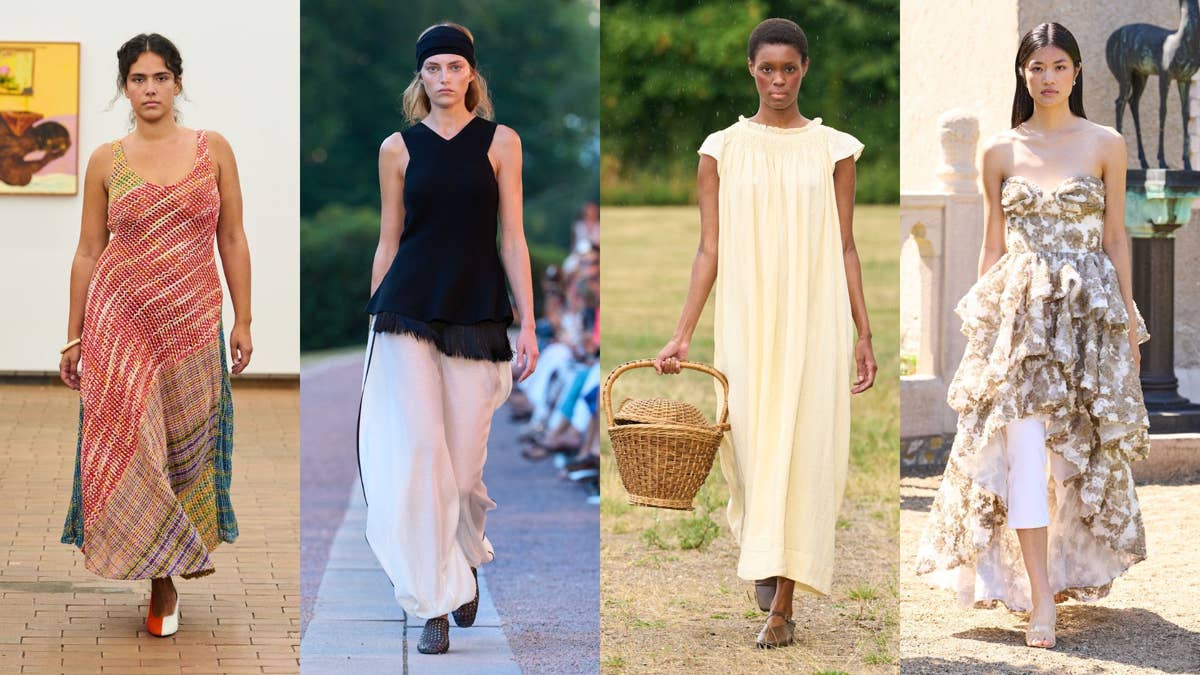
# Copenhagen Fashion Week Sets Spring 2027 Direction as Saucony and Asos Reshape Fashion's Ecosystem
Copenhagen Fashion Week delivered its Spring 2027 collection previews this week, establishing the season's aesthetic hierarchy and signaling where the industry's creative energy clusters next. The Danish capital continues cementing itself as a proving ground for forward-thinking designers who resist London's commercial pressure and Paris's heritage weight. This season's runway declarations lean toward texture-driven minimalism, oversized tailoring with precision cuts, and a return to natural fibers that reject the synthetic excess of recent seasons. Color grading skews toward earthy palettes dominated by clay, sage, and warm grays. The week confirmed that Copenhagen's independent designer network, including brands like Ganni, Holzweiler, and emerging studios, now shapes global conversation as forcefully as traditional fashion capitals.
Meanwhile, sneaker culture's power structure shifted measurably this week. Saucony claimed the title of StockX's fastest-growing sneaker brand, dethroning the usual suspects in the secondary market hierarchy. The result reflects a broader resurgence of '90s and early-2000s running silhouettes as luxury collectives embrace archive sportswear. Saucony's momentum comes after strategic collaborations with streetwear creators and re-releases of heritage models that tap nostalgia without appearing derivative. The brand's ascent on StockX suggests major shift in sneaker collecting priorities. Nike and Jordan Brand maintain volume dominance, but Saucony's growth rate indicates younger collectors now allocate serious capital toward overlooked athletic archives. This creates immediate opportunities for other dormant athletic brands to revive through selective collabs and archival rereleases.
Asos simultaneously announced its most aggressive emerging designer platform yet, allocating significant digital real estate and merchandising support to independent creators. The move addresses Asos's ongoing effort to position itself as a discovery engine rather than a fast-fashion warehouse. By platforming emerging designers alongside house brands like Topshop and ASOS Design, the retailer strengthens its appeal to Gen Z shoppers who increasingly demand proof of ethical sourcing and creative authenticity. The platform grants emerging brands access to Asos's 24 million monthly users without demanding equity stakes or exclusive distribution agreements. For small designers, this represents a crucial pathway to scale without surrendering control. Asos benefits by differentiating itself from Shein and other ultra-cheap alternatives that compete purely on price. The strategy also hedges against the regulatory pressure fast-fashion retailers face globally. Supporting emerging designers creates a narrative buffer: Asos positions itself as a platform for independent creativity rather than a pure extraction machine.
These three movements reveal fashion's current operating system. Copenhagen proves design excellence still originates outside luxury's traditional gatekeepers. Saucony's StockX surge proves secondary markets now function as primary price-discovery mechanisms, reshaping how brands think about launch strategy and retail distribution. Asos's emerging designer initiative proves that scale retailers survive through curation, not underselling. Each movement pulls in the same direction. Independence matters more than heritage. Authenticity commands retail real estate. Archive and emerging design compete in the same space and win based on cultural relevance, not production cost.