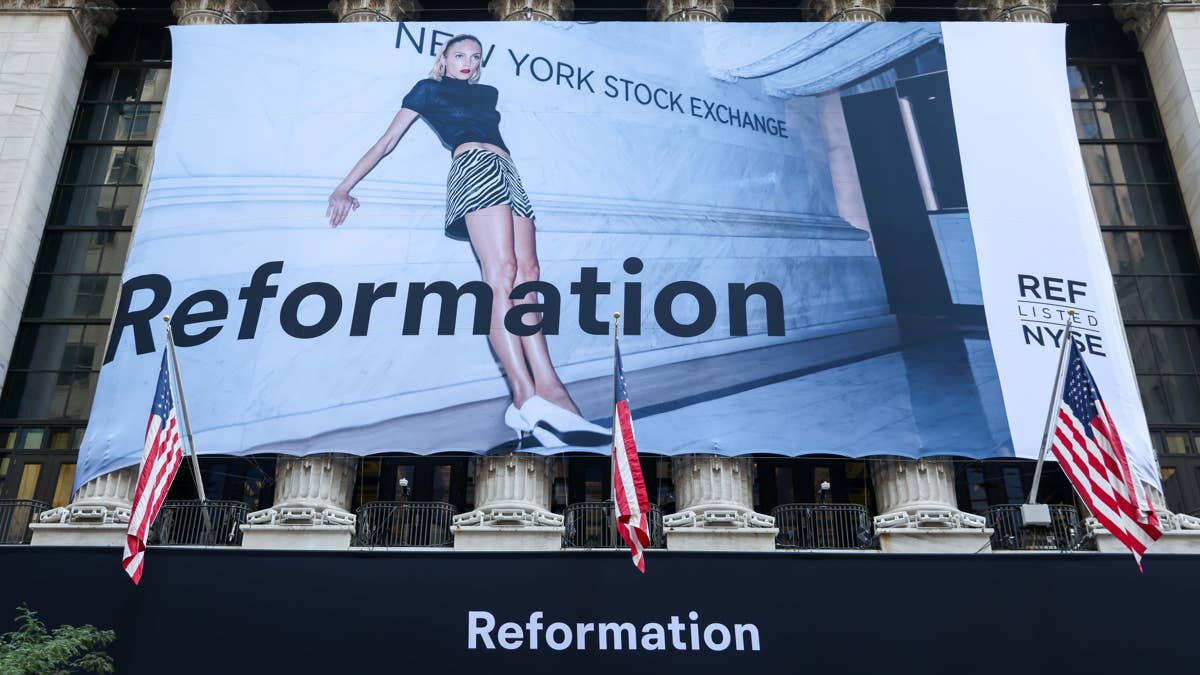
Reformation went public on the New York Stock Exchange, entering the market at an $886.1 million valuation. The sustainability-focused retailer's IPO reflects investor appetite for brands prioritizing environmental and ethical practices, though the valuation sits below earlier expectations that hovered closer to $1 billion.
The listing arrives amid turbulent waters for two athletic giants. Nike and Lululemon each face pricing lawsuits from consumers alleging anti-competitive practices and inflated markups. These legal challenges strike at the heart of premium athletic wear economics, where both brands command loyalty through marketing and perceived innovation rather than cost advantages alone. The suits challenge whether these companies artificially suppress competition through distribution controls and pricing strategies.
Separately, Oxy Capital submitted a binding offer for Aeffe, the Italian luxury holding company behind brands like Alberta Ferretti and Philosophy di Lorenzo Serafini. The move signals continued consolidation in heritage European luxury, where independent fashion houses increasingly attract acquisition interest from capital-backed investors seeking established brand portfolios and manufacturing capabilities.
Reformation's public debut underscores shifting consumer priorities around sustainability credentials, a narrative the brand built meticulously over its 15-year trajectory. The company generates roughly $300 million in annual revenue through its direct-to-consumer model and wholesale partnerships, positioning it as a scaled alternative to fast fashion.
The timing raises questions about valuation benchmarks for purpose-driven retailers. Reformation trades on environmental transparency and supply chain visibility. Investors appear willing to pay for these credentials, yet the IPO pricing reflects sobering market realities. Growth-stage fashion companies face scrutiny around unit economics, customer acquisition costs, and path to profitability.
Nike and Lululemon's legal battles carry broader implications. If courts rule against these brands, expect pricing pressure across premium athletic retail. Both companies built significant margins through brand power and distribution exclusivity.