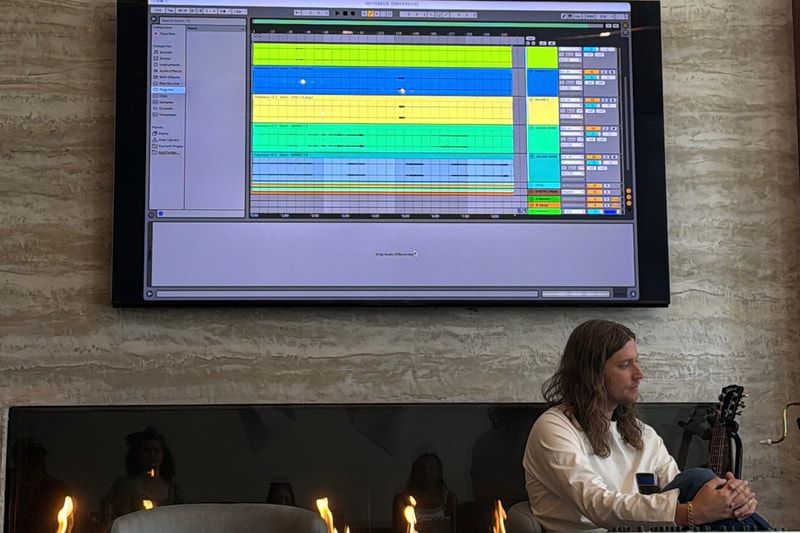
Ludwig Göransson has secured his position as Christopher Nolan's go-to composer, returning for a third consecutive collaboration on "The Odyssey" after scoring "Tenet" (2020) and "Oppenheimer" (2023). The soundtrack reflects the film's sonic ambitions, pairing contemporary hip-hop with period instrumentation across its tracklist.
Göransson demonstrated the score's range at a listening event featuring Sonus Faber's Olympica G3 speakers, a $30,000 USD audiophile system. The composition juxtaposes Travis Scott delivering a contemporary reimagining of Homer's opening invocation against authentic Bronze Age flutes and lyres, establishing a sonic bridge between ancient and modern storytelling.
This collaboration underscores a broader trend in prestige cinema where composers function as crucial creative partners rather than afterthoughts. Nolan's recurring partnership with Göransson reflects the director's investment in sound design as narrative architecture. Following the critical and commercial success of "Oppenheimer's" soundscape, which emphasized organic instrumentation over digital manipulation, "The Odyssey" appears to expand that philosophy into genuinely hybrid territory.
Göransson's approach aligns with contemporary scoring practices that reject genre purity. His work increasingly blurs boundaries between classical composition, electronic production, and contemporary music. The inclusion of Travis Scott signals Nolan's willingness to incorporate recognizable artists into the soundtrack fabric, a strategy that serves both artistic credibility and commercial reach.
The Sonus Faber presentation itself carries cultural weight. Premium audio equipment has gained renewed attention among discerning listeners, and positioning a major film score premiere on high-end speakers elevates both the composer's work and the listening experience itself. This strategy has become standard for prestige soundtracks, reinforcing that audio quality matters to contemporary filmmaking.