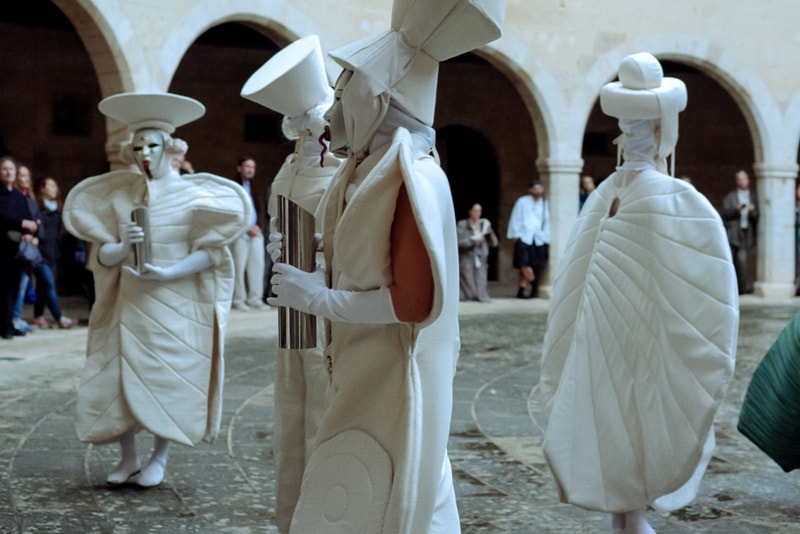
LOV. Foundation and XTANT launched a cultural partnership that positions textile craft and artisanal knowledge as dynamic, evolving systems rather than static heritage artifacts. The collaboration materialized through lov.YATRA, an immersive program debuted in Mallorca this summer that gathered artists, cultural figures and changemakers to explore the island's active artistic ecosystem.
The initiative's name derives from Sanskrit, yatra meaning "a purposeful journey or pilgrimage." This framing signals a deliberate shift in how the fashion and cultural sectors approach craft traditions. Rather than museum-ifying textiles and techniques, LOV. Foundation and XTANT present them as living practices connected to community memory and collective knowledge transfer.
Mallorca served as the pilot location, chosen for its deep material traditions and generational creative practices. The program created spaces where contemporary practitioners, established artisans and emerging makers could exchange techniques, philosophies and practical skills. This peer-to-peer model acknowledges that craft knowledge survives through active use and mentorship, not preservation alone.
The partnership addresses an industry-wide recognition that fast fashion's dominance has severed connections between makers and methods. Brands increasingly understand that authentic differentiation demands engagement with artisanal communities and their lived practices. LOV. Foundation and XTANT's approach goes further, treating craft as culture actively produced by communities rather than a marketing narrative layered onto products.
This long-term commitment reflects broader fashion sector movements toward transparency and material literacy. High-end labels from Loro Piana to emerging sustainable brands have invested in artisan partnerships, yet these collaborations often remain extractive or time-limited. LOV. and XTANT's sustained model suggests a different economic and social structure where knowledge transfer and community continuity become central to value creation.
The program's success will likely influence how other foundations and cultural organizations approach craft