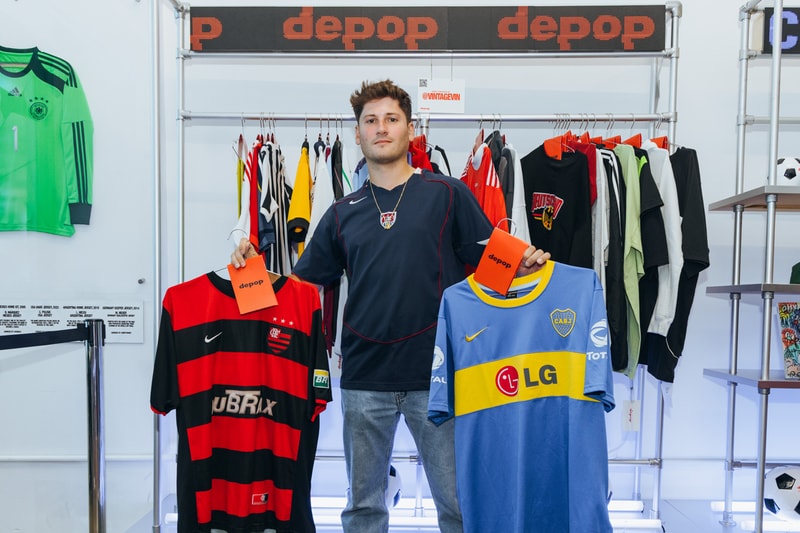
Depop tapped into soccer culture's explosive U.S. growth by hosting a Clubhouse activation at Hypebeast Cup in Manhattan during peak football season. The platform featured Vintage Vin, a prolific Depop seller specializing in vintage soccer apparel, who observed the seismic shift in American consumer interest around the sport.
"Seeing this stuff in the United States wasn't always so common," Vin noted, reflecting on how soccer merchandise has infiltrated mainstream fashion beyond die-hard enthusiasts. The observation captures a broader retail phenomenon. Soccer apparel now attracts casual wearers, non-fans, and dedicated collectors alike, signaling the sport's transcendence from niche interest to cultural fixture.
The Depop Clubhouse installation reflects the resale platform's strategy to embed itself within youth culture and trend-setting communities. By partnering with Hypebeast, a bellwether for streetwear and luxury crossover moments, Depop positioned secondhand soccer gear as a legitimate fashion category. Vintage sportswear carries cultural currency that new retail cannot replicate. Collectors hunt for rare jerseys, retro kits, and archived pieces with the same fervor applied to limited sneaker drops.
Vintage Vin's prominence at the event underscores Depop's creator economy model. Individual sellers drive discovery and authenticity on the app. Unlike traditional resale platforms, Depop functions as a social network where curators build followings and establish taste-making authority. Vin's specialization in vintage soccer wear taps into the nostalgia-driven demand reshaping fashion retail.
The timing matters. Major League Soccer's investment in star power, expanded media coverage, and the sport's Gen Z appeal have transformed American attitudes toward football. Fashion brands from Nike to Gucci have capitalized on this momentum. Depop's