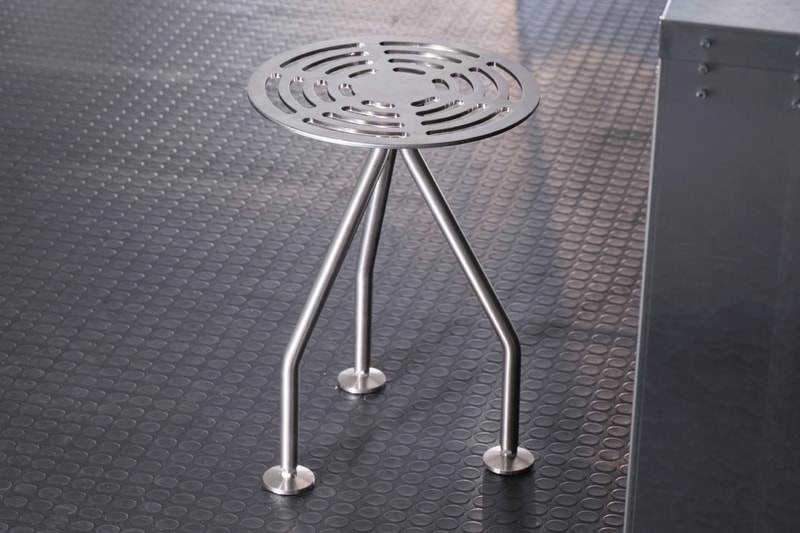
Andrea Ferrari channels aerospace and cycling engineering into furniture with the OG—NM301, a stainless steel stool unveiled through a collaboration between NM3 and QuadroDesign. The designer's approach merges two precision-driven disciplines, leveraging aeronautical techniques and bike-frame construction methods to create a piece that prioritizes lightweight functionality without sacrificing structural integrity.
The stool employs CNC-machined construction with hidden fasteners, a hallmark of high-performance design borrowed directly from aerospace manufacturing. This methodology eliminates visible joints, delivering a seamless aesthetic while maintaining the engineering rigor expected in aviation and cycling industries. The result reads as minimal and refined, with form following the material's inherent properties rather than decorative impulse.
Ferrari's years of collaborative research into lightweight metal structures inform every detail. Stainless steel becomes the logical material choice, offering durability, weather resistance, and the visual language associated with industrial precision. The construction philosophy extends versatility across contexts. The OG—NM301 functions equally well in outdoor environments, where weather demands corrosion resistance, and in interior spaces where its clean lines complement contemporary, cluttered aesthetics.
This crossover between automotive and furniture design reflects a broader industry trend toward borrowed expertise. Designers increasingly raid specialized sectors for manufacturing insights and material knowledge. Brands like Hay and Herman Miller have long employed this strategy, but Ferrari's approach feels distinctly rooted in performance culture rather than corporate modernism. The stool occupies the same territory as Rick Owens' furniture experiments or Konstantin Grcic's industrial-inflected pieces, where function drives form and maker's craft remains visible in engineering decisions.
The collaboration between NM3 and QuadroDesign positions the OG—NM301 within design circles that value process transparency and technical rigor. Neither brand prioritizes instant accessibility or mass