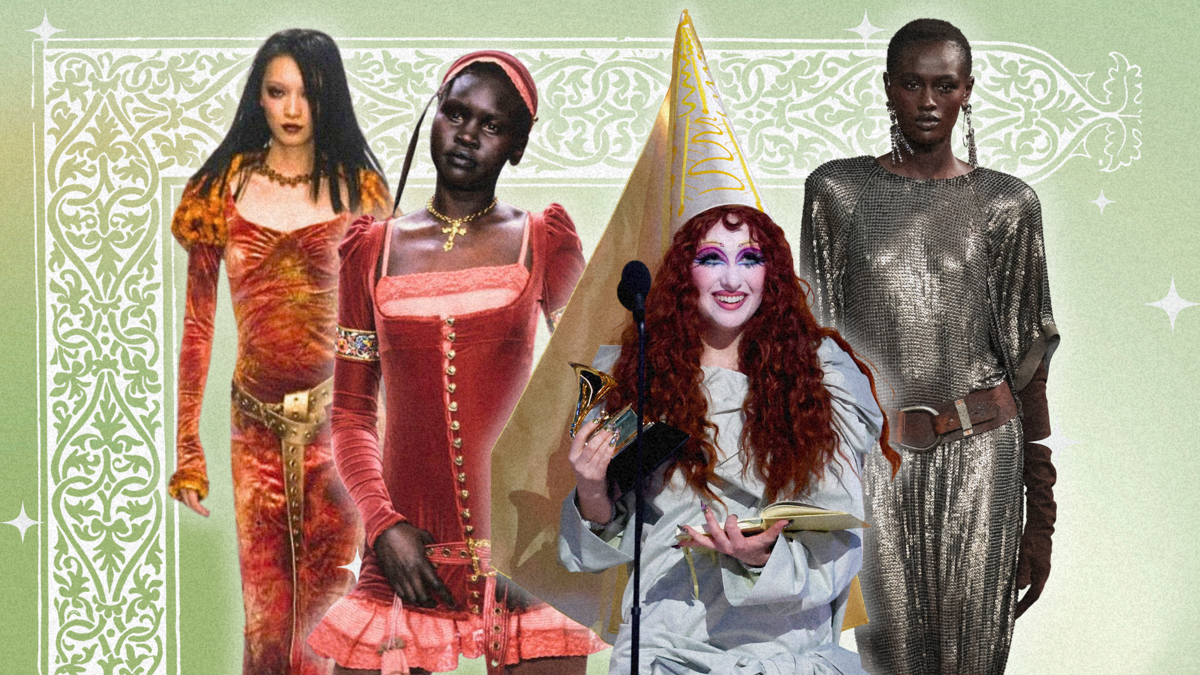
The Y2K maximalism movement meets medieval fantasy. Velvet, chainmail, and exaggerated sleeves dominate runways and street style this season, creating a hybrid aesthetic that blends early-2000s excess with fantasy-inspired silhouettes. Designers embrace theatrical dressing, rejecting minimalism for bold textures and ornamental details.
This trend reflects broader fashion cycles. Y2K nostalgia resurged around 2015 and evolved into a maximalist stance that now incorporates fantasy elements. The medieval coding serves a specific purpose. Chainmail prints, corset-style construction, and dramatic sleeves signal power and individuality. They function as armor in the metaphorical sense. Velvet, historically associated with luxury and royalty, reinforces this reading.
High fashion embraced this direction aggressively. Luxury houses incorporate textile play and dramatic proportions into core collections rather than relegating them to fantasy capsules. The shift away from quiet luxury and understated aesthetics accelerates. Social media amplifies bold fashion choices. TikTok and Instagram reward theatrical dressing, pushing mainstream consumers toward statement pieces.
Retailers capitalize on this momentum. Fast fashion brands stock velvet pieces, chainmail accessories, and dramatic sleeve shapes at accessible price points. The trend democratizes quickly, moving from runway concept to high street reality within weeks.
This medieval-Y2K fusion also reflects current cultural moments. Fantasy content dominates streaming platforms. House of the Dragon, The Rings of Power, and similar shows influence consumer appetite for dramatic, otherworldly aesthetics. Fashion responds to entertainment consumption patterns.
The trend carries longevity potential. Unlike fleeting seasonal aesthetics, this movement combines nostalgia (Y2K appeals to millennials and older Gen Z) with fantasy escapism (relevant across demographics). The emphasis on individual expression through dramatic dressing sustains interest beyond typical trend