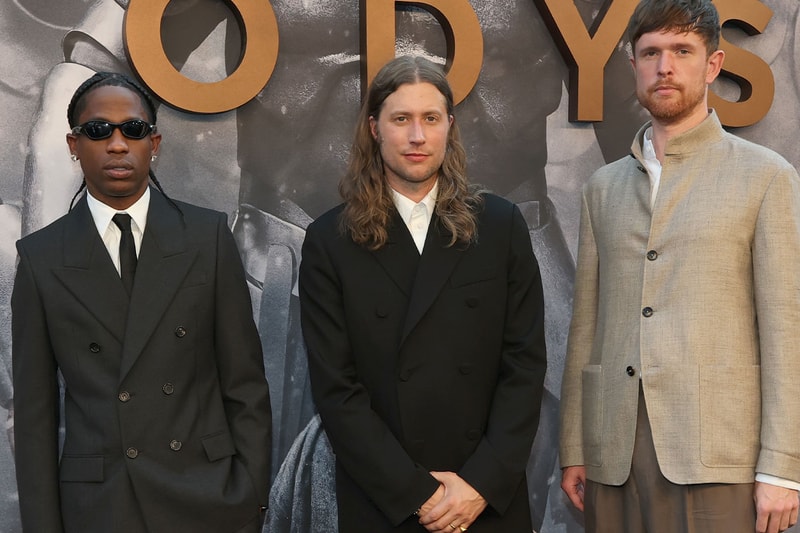
Ludwig Göransson's soundtrack for Christopher Nolan's "The Odyssey" film adaptation has arrived, anchored by a surprising end credits collaboration. "When I'm Home" pairs producer-composer James Blake with rapper Travis Scott, marking an unexpected fusion of electronic experimentation and hip-hop sensibility within Nolan's ambitious cinematic universe.
The track demonstrates Blake's signature intricate production aesthetic meeting Scott's distinctive vocal texture. Blake has long occupied the intersection of electronic music and pop accessibility, while Scott brings his atmospheric rap sensibility to what traditionally sits as orchestral territory in Nolan productions. The pairing signals Göransson's willingness to push beyond conventional film score conventions.
This collaboration extends beyond the soundtrack itself. Scott appears on-screen within the film as a bard character, layering his involvement across the project's multimedia landscape. The casting choice itself reflects contemporary Hollywood's comfort with hip-hop artists crossing into acting roles, a trend that accelerated significantly throughout the 2020s.
Göransson previously collaborated with Nolan on "Oppenheimer," establishing their working relationship before tackling this adaptation of Homer's ancient epic. His approach to "The Odyssey" balances classical storytelling requirements with modern production sensibilities, evident in the Blake-Scott pairing's unconventional positioning within the narrative conclusion.
The soundtrack release strategy places "When I'm Home" at the commercial and artistic forefront, leveraging both artists' fanbases to amplify reach. Blake's critical prestige and Scott's commercial dominance create complementary marketing pull. This approach reflects how contemporary film soundtracks function as standalone listening experiences and promotional vehicles simultaneously.
The collaboration underscores how film scores no longer exist in isolation from pop music ecosystems. Göransson's integration of Blake and Scott positions "The Odyssey" within broader cultural conversations about genre permeability and