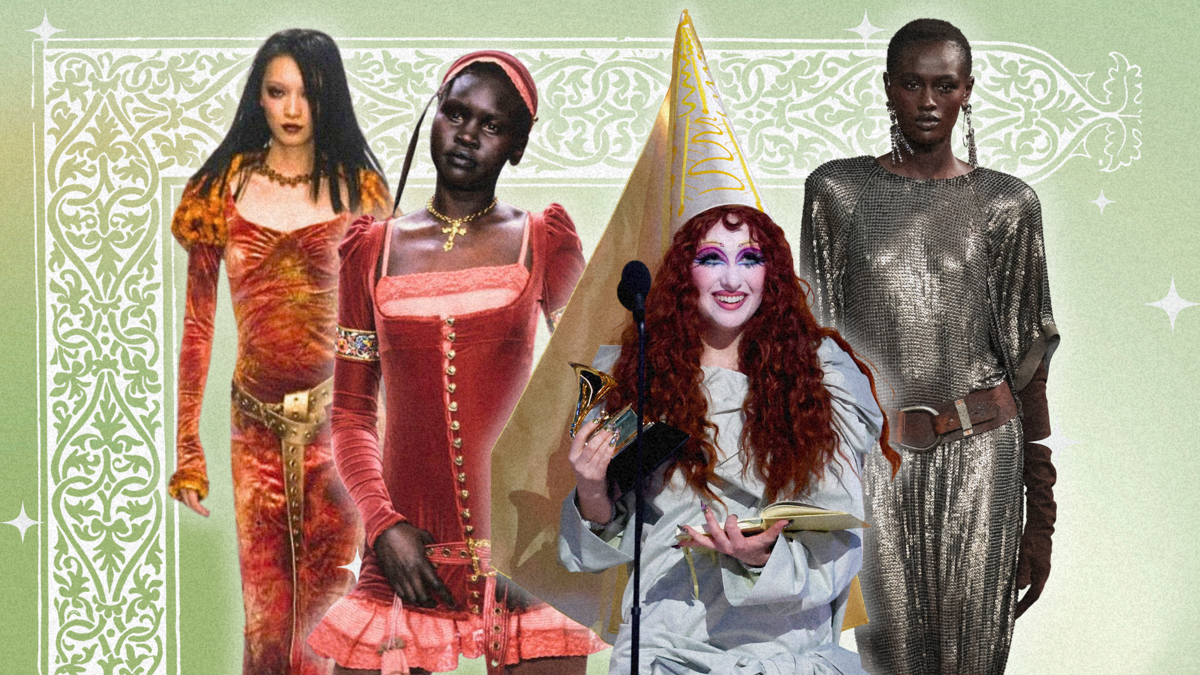
The fashion industry cycles back to a peculiar intersection of aesthetics this season. Velvet, chainmail, and theatrical sleeves dominate runways and retail floors, marking a deliberate revival of medieval-inspired silhouettes filtered through a distinctly Y2K lens.
This trend pulls from two distinct eras simultaneously. The medieval period provides the structural drama: corseted bodices, exaggerated proportions, and ornamental armor-like details. The Y2K influence adds irony, accessibility, and a campy sensibility that prevents the look from feeling historically precious. Designers treat chainmail not as historical artifact but as sculptural embellishment, often in unexpected materials like plastic or lightweight metals.
Velvet returns as the primary luxury texture. Its tactile richness pairs with the era's love of drama while satisfying contemporary desires for sensory fashion. Dramatic sleeves, whether bell-shaped or rigidly structural, recall both medieval gowns and the exaggerated proportions that defined early 2000s maximalism.
This aesthetic speaks to broader industry patterns. Fashion continues mining nostalgia while rejecting minimalism. Consumers increasingly reject the quiet luxury movement, favoring statement pieces that announce themselves. The fusion of medieval and Y2K codes allows brands to offer something simultaneously historical and contemporary, serious and playful.
The trend also reflects escapism. Medieval imagery offers fantasy and otherness, while Y2K nostalgia provides comfort in the familiar. Combined, they create a costume-like quality that dominates current collections.
Luxury houses and fast-fashion retailers alike embrace the look, proving its mainstream appeal. The democratization of dramatic fashion signals a shift away from the understated elegance that dominated the past five years. Consumers want texture, volume, and visual impact.
This velvet-and-chainmail moment won't last indefinitely. Yet it reveals what contemporary