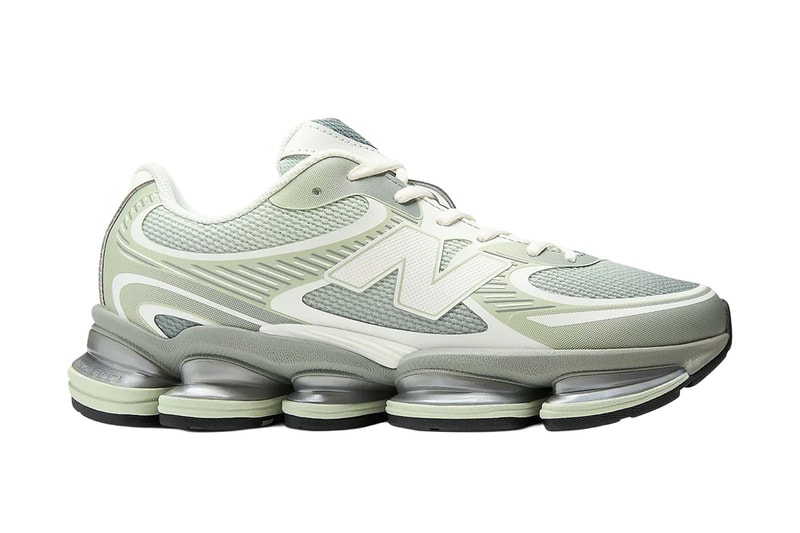
New Balance expands its running-inspired lifestyle lineup with the freshly launched 2000 sneaker in the "Silver Moss" colorway. The shoe arrives as part of the brand's broader push to modernize its heritage catalog with contemporary design sensibilities.
The upper features a progressive minimalist aesthetic built from breathable mesh paired with sleek synthetic overlays. The predominantly muted "Silver Moss" tone serves as the foundation, punctuated by "Bayberry" green accents and "Sea Salt" details that ground the palette in earthy restraint. This color story reflects a broader trend across athletic footwear toward naturalistic, toned-down palettes that resist loud maximalism.
The 2000 silhouette occupies a curious space in New Balance's architecture. The brand has resurrected numerous heritage models in recent seasons, yet the 2000 remains less ubiquitous than the 574 or 990v3. This positions it as an accessible entry point for consumers seeking something distinct without veering into exclusive or limited territory.
Priced at $170 USD, the Silver Moss edition sits at standard New Balance lifestyle pricing. The shoe drops via New Balance's own channels and is available now, suggesting a general release rather than a scarcity-driven drop. This accessibility strategy contrasts sharply with how other brands manufacture hype around limited colorways.
The minimalist mesh construction and restrained palette align with active lifestyle aesthetics gaining ground across both streetwear and performance sectors. Brands from Salomon to Nike have similarly leaned into understated earth tones and breathable mesh constructions, signaling a market shift away from chunky maximalism toward refined simplicity.
New Balance's execution here targets the consumer fatigued by hype cycles and scarcity marketing. By releasing broadly at accessible pricing, the 2000 Silver Moss