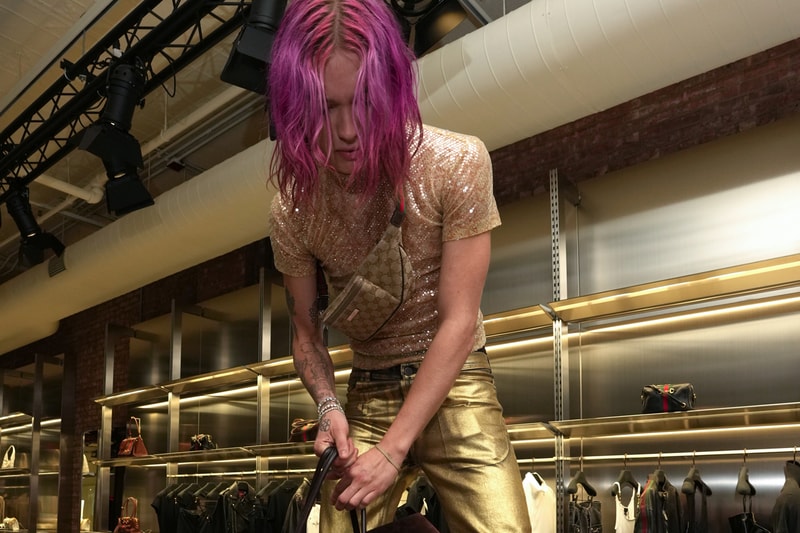
Nettspend's takeover of Gucci's Wooster Street flagship in Manhattan exemplified luxury fashion's deepening embrace of hip-hop culture and underground rap momentum. The rapper hosted a free public meet-and-greet that drew crowds to the SoHo location, connecting fans directly with the brand through an artist whose independent ethos challenges traditional luxury gatekeeping.
The event positioned Gucci as a curator of cultural moments rather than a purely retail operation. By activating the space around Nettspend's recent album "early life crisis," Gucci tapped into the rapper's grassroots fanbase and credibility within the underground hip-hop scene. This strategy reflects a broader industry shift where luxury houses court authenticity by aligning with artists who move outside mainstream channels.
Nettspend's integration into Gucci's ecosystem signals the brand's continued commitment to court younger audiences through hip-hop partnerships. Alessandro Michele's tenure positioned Gucci as a collaborator with rap culture, and successor Sabato De Sarno has sustained that momentum. These pop-ups operate differently from traditional retail, functioning as cultural events that generate social currency and community engagement.
The convergence runs both directions. Underground rappers gain access to luxury distribution and prestige, while Gucci maintains cultural relevance by supporting independent artists before mainstream adoption. Nettspend's fanbase followed him into the store without traditional advertising, transforming the Gucci location into a concert venue or community hub rather than a transactional space.
This model extends beyond one-off activations. Hip-hop has become central to luxury's narrative, from collaborations to co-branded collections to artist residencies. The blurring of boundaries between high fashion and underground rap continues to reshape how luxury brands build loyalty and define themselves culturally. What happens at Gucci's flagship now reflects conversations happening in