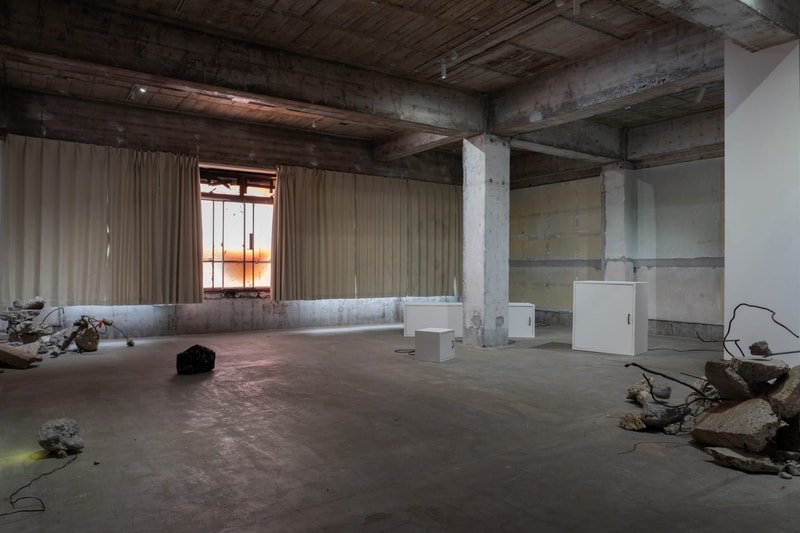
Japanese artist Taiki Yokote transforms two Tokyo venues into a meditation on liminal spaces and emotional duality. The dual-venue exhibition, split between CON_ and parcel, runs until July 26 and interrogates how a single letter shifts meaning from "lovely" to "lonely." This conceptual hinge frames Yokote's exploration of overlooked everyday moments through installations, sculptures, video, and photography.
Yokote's practice dwells in the spaces between states. His work captures the architectural and psychological thresholds where transitions occur—hallways, waiting rooms, moments suspended between arrival and departure. The artist transforms these mundane environments into contemplative landscapes that reveal hidden emotional textures. His installations invite viewers to inhabit these liminal zones and confront what lies beneath the surface of ordinary experience.
The dual-title structure of the exhibition reinforces Yokote's central thesis. By presenting nearly identical titles separated by a single phonetic difference, he demonstrates how language shapes perception and feeling. The exhibition becomes a visual argument about the fragility of meaning and how context, circumstance, and minor variations fundamentally alter our understanding of space and self.
Yokote's multimedia approach prevents the work from becoming didactic. Video works capture time passing in overlooked corridors. Photography isolates architectural details that typically escape notice. Sculptures occupy the exhibition spaces with a haunting presence, inviting touch and close observation. Together, these elements create an immersive environment where viewers become complicit in the artist's act of attention.
The Tokyo venue choice matters. Japan's contemporary art scene has long embraced conceptual rigor and material experimentation. CON_ and parcel, as exhibition spaces, signal Yokote's position within an avant-garde context that prizes intellectual engagement over commercial accessibility.
This exhibition establishes Yokote as an artist invested in phenomenology and emotional archaeology. He asks viewers to slow