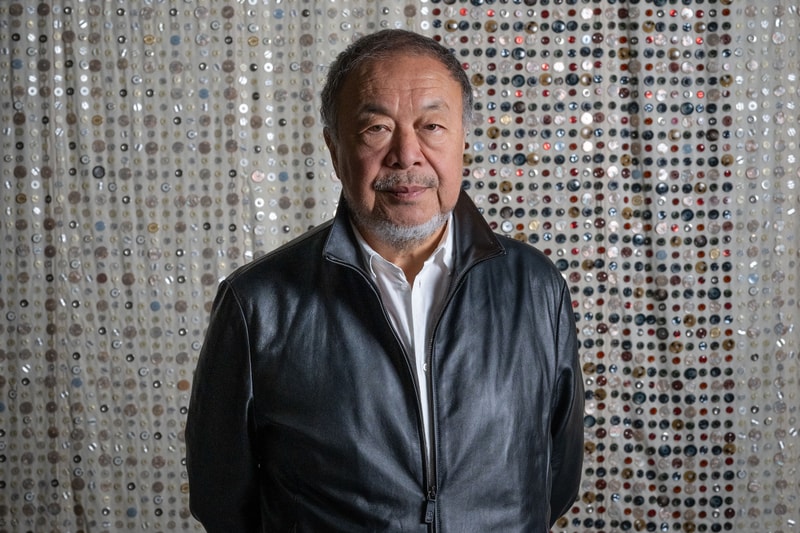
Ai Weiwei stages his first durational performance on July 3 at Aviva Studios in Manchester, reliving the brutal conditions of his 2011 detention in China. The 24-hour live piece, titled "Sewing a Button," forces the artist to inhabit a replica cell where he will eat, sleep, work, wash, and write without interruption. Weiwei spent 81 days in secret detention in Beijing on charges of "economic crimes," an experience that fundamentally shaped his practice as a dissident artist and activist.
The performance anchors Weiwei's new exhibition, "Button Up!", which uses the British-Chinese textile trade as a lens to examine globalization, colonialism, and imperial power structures. By treating his own body as the medium, Weiwei transforms personal trauma into a collective interrogation of state violence and labor exploitation. The durational format demands witness. Visitors can observe the artist in real time, collapsing the distance between artwork and lived experience.
This move reflects a broader shift in contemporary art toward embodied, politically urgent practices. Weiwei's work has always operated at the intersection of sculpture, photography, and activism. "Sewing a Button" intensifies this convergence by making endurance itself the subject. The title references the mundane act of textile work, tying his personal suffering directly to the invisible labor networks that undergird global fashion and manufacturing.
The performance carries enormous symbolic weight. Weiwei's detention became an international rallying point for artists and human rights advocates. By reenacting it in a Western gallery space, he refuses to let the trauma recede into historical narrative. Instead, he insists on its present tense, on the continued relevance of state repression and the artist's role in bearing witness to it.
"Button Up!" opens a conversation about empire that extends beyond Ai