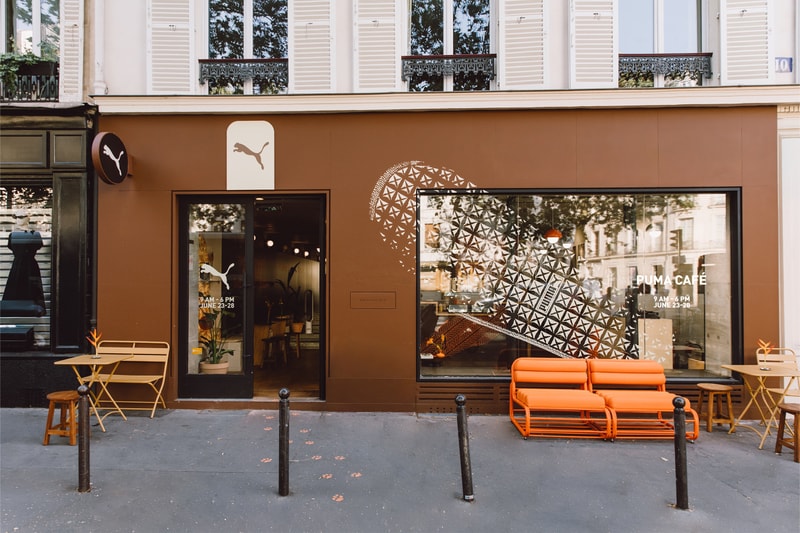
PUMA activated Paris Fashion Week with PUMA Café, a five-day pop-up that ran June 24 through 28 celebrating two cornerstone silhouettes: the Suede and the Speedcat. The experiential space functioned as both footwear showroom and hospitality venue, serving refreshments and curated soundscapes by Timothée Joly and Kofi Bæ.
The Suede represents PUMA's legacy in basketball and streetwear culture since its 1968 debut. The Speedcat, originally designed for motorsport, bridges performance heritage with contemporary sneaker appeal. By situating both models within a café environment during Fashion Week's frenetic schedule, PUMA positioned these shoes as cultural anchors rather than mere products.
This activation strategy reflects broader luxury sportswear dynamics. Brands increasingly blur lines between retail, hospitality, and entertainment at major fashion events. PUMA competes directly with Nike and Adidas for mindshare among designers and stylists attending the shows. A branded café offers respite while embedding product narratives into attendees' sensory experience.
The music curation by Joly and Bæ reinforces PUMA's cultural positioning beyond footwear. Sound design shapes brand perception among fashion-forward audiences. This signals PUMA's investment in lifestyle storytelling rather than transactional selling.
The Suede and Speedcat carry distinct equity. The Suede signals heritage and retro cool. The Speedcat speaks to performance lineage and contemporary styling versatility. Showcasing both simultaneously reinforces PUMA as a house with depth across categories and eras.
Pop-ups during Fashion Week generate earned media, social content, and direct designer relationships. PUMA's Paris activation competed for attention against competing brand experiences. Scaling intimacy with