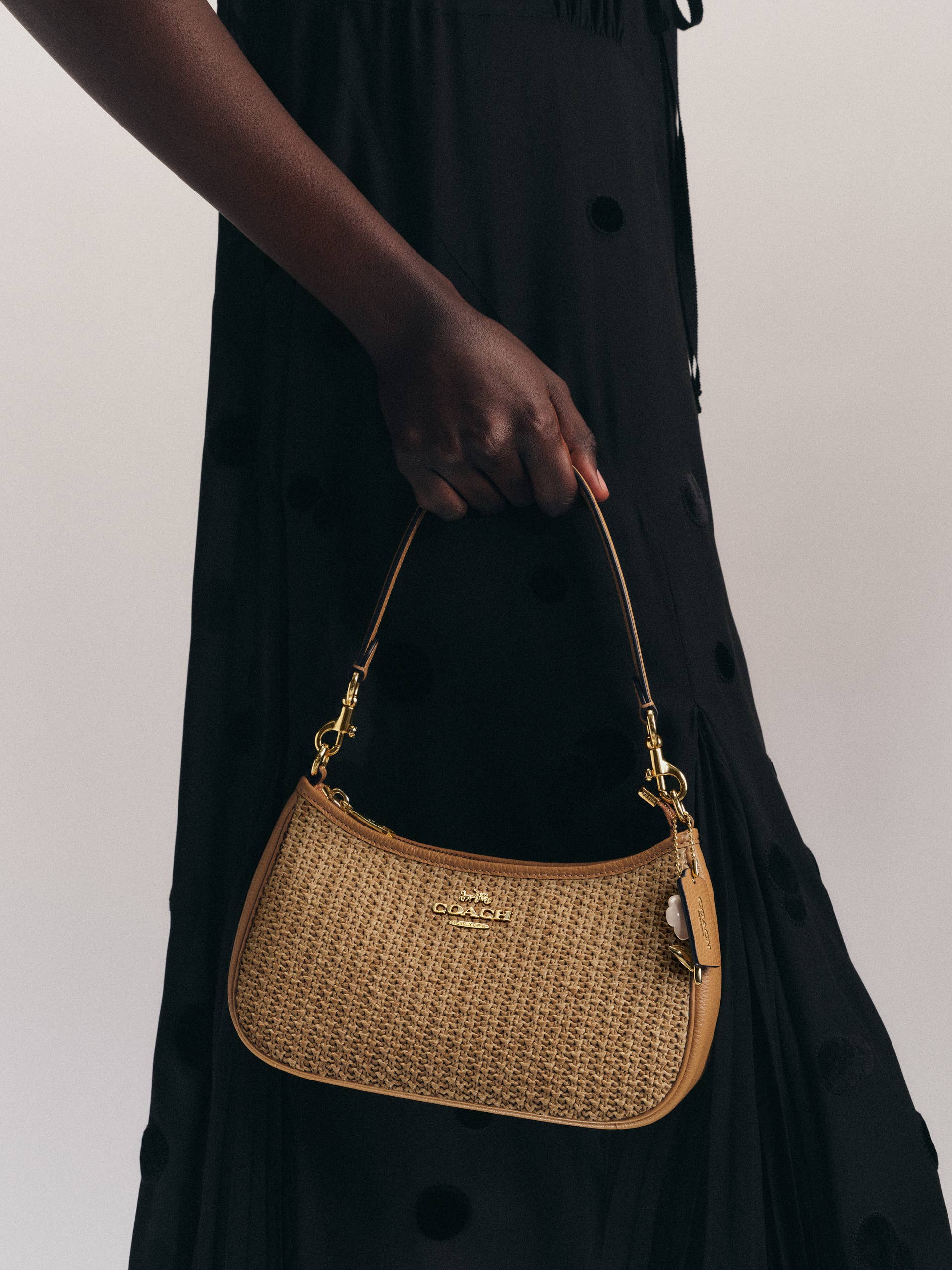
The small handbag has shed its evening-only reputation. These compact styles now function as legitimate daytime carriers, offering practicality wrapped in visual interest for spring and summer wardrobes.
Designers have reimagined the miniature silhouette beyond cocktail occasions. Brands like Bottega Veneta, Khaite, and Coach have released compact iterations in everyday materials and colorways. Canvas, leather, and structured fabrics replace evening embellishments. The shift reflects broader consumer demand for versatile pieces that work across multiple contexts.
The trend gains traction as minimalism persists in fashion consciousness. Consumers increasingly reject oversized totes in favor of intentional, curated collections. A small handbag forces editing. What actually travels with you daily reveals itself. Phone, wallet, keys, lipstick. Nothing extraneous.
Summer temperatures also favor the smaller carry. Lightweight frames and reduced volume eliminate the visual heaviness of larger bags against bare shoulders and linen dresses. Structured mini bags maintain silhouette clarity without fabric bulk. Soft, slouchy versions offer textural contrast to streamlined summer separates.
Price points vary considerably. Luxury houses charge premium rates for hand-finished miniatures. Contemporary brands offer accessible alternatives. Affordable chains now stock small handbags in directional styles previously exclusive to high-end collections.
The practical argument strengthens the category's expansion. A mini bag paired with crossbody straps becomes hands-free. Structured handles transform it into a top-handle style. Modularity means fewer purchases necessary. One piece adapts to multiple scenarios through styling choices.
Fashion editors have normalized small handbags beyond event dressing. Street style photography from fashion weeks shows attendees carrying minimal silhouettes throughout daytime hours. Influencers and industry figures integrate them into casual outfits rather than reserving them for evening