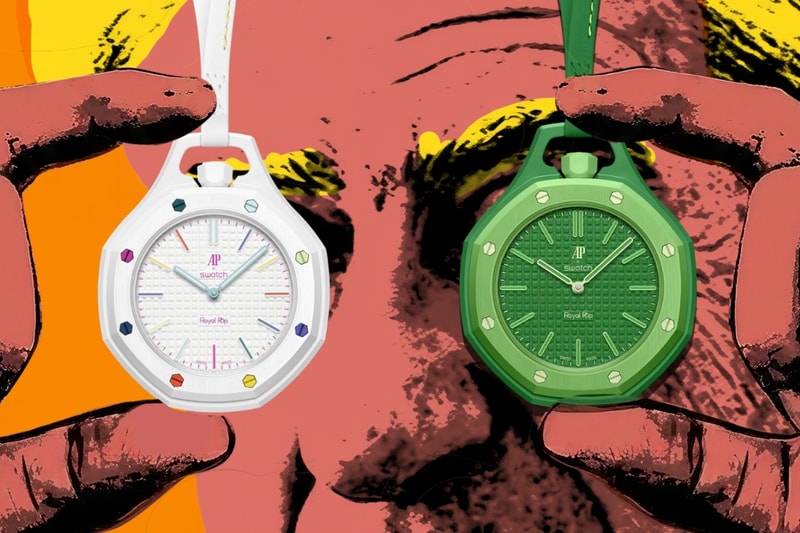
Audemars Piguet and Swatch's Royal Pop collaboration ignited immediate backlash from watch purists the moment the pocket watch dropped. The Swiss powerhouses' partnership, years in the making, deviated sharply from collector expectations. Enthusiasts anticipated a wristwatch reinterpretation of Gérald Genta's octagonal Royal Oak silhouette in Swatch's signature Bioceramic material. Instead, the brands pivoted to a mechanical pocket watch format, stripping away the iconic wrist-worn identity that defined both the Royal Oak and contemporary collecting culture.
The format choice proved divisive. Pocket watches occupy a niche space in modern horology, existing outside the mainstream collecting conversation dominated by wrist-bound luxury sports watches. For purists invested in Audemars Piguet's prestige, the pivot felt like a brand dilution. The Royal Oak represents one of watchmaking's most sacred designs, and translating it outside its intended form sparked questions about design integrity and commercial compromise.
Yet the collaboration's DNA runs legitimately deep. Both Swatch and Audemars Piguet remain Swiss institutions with shared manufacturing heritage. Swatch's parent company, Swatch Group, owns multiple luxury watch houses. This crossover represented more than novelty marketing. The vibrant colorways and accessible price point opened Genta's geometry to audiences who'd never afford a genuine Royal Oak, though not in the format they wanted.
The firestorm reflects larger industry tensions. Luxury watch collectors increasingly value exclusivity and design coherence. A pocket watch Royal Oak reads as conceptually lazy to gatekeepers, regardless of execution quality. The decision to abandon the wristwatch market segment, where both brands already dominate, felt like a failure to engage with contemporary collecting priorities.
The Royal Pop ultimately exposed divides between accessibility and authent