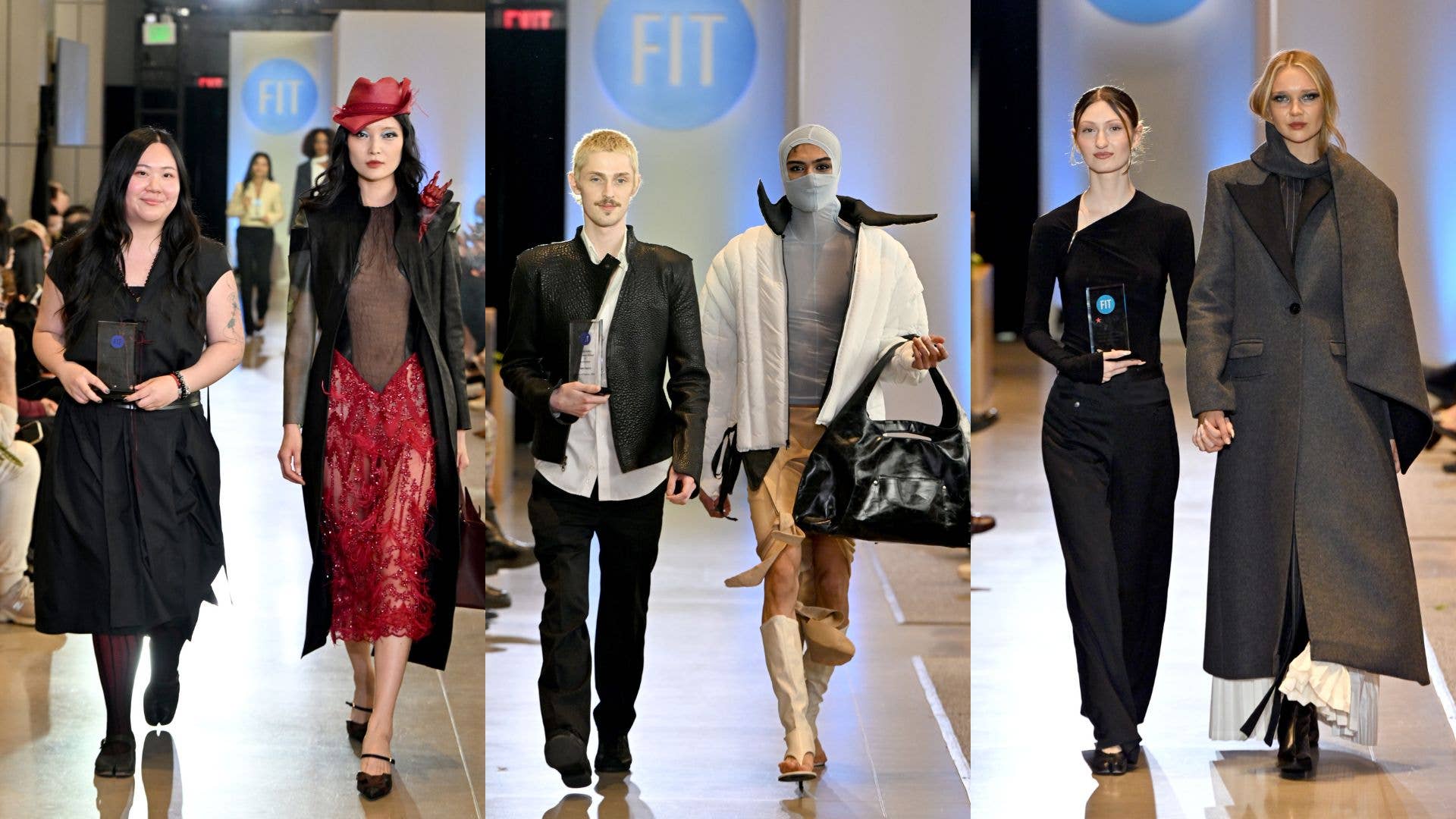
FIT's 2026 Future of Fashion Runway Show presented eighty graduating fashion design students with a platform to debut their final collections, signaling the emergence of the industry's next wave of creative voices.
The Fashion Institute of Technology's annual showcase functions as a crucial discovery moment for established brands, retailers, and industry gatekeepers seeking fresh talent. This year's exhibition featured conceptual work ranging from sustainable fabrication experiments to avant-garde silhouettes, reflecting the aesthetic priorities shaping contemporary design education.
Student collections demonstrated pronounced interest in circular fashion practices and material innovation. Several designers incorporated deadstock textiles and regenerated fibers, addressing the industry's mounting pressure to adopt responsible production methods. Others pushed toward sculptural approaches, with exaggerated proportions and unconventional construction techniques dominating the presentations.
The graduation show serves as FIT's answer to international fashion weeks, condensing emerging design energy into a single evening. Industry professionals attend specifically to identify promising designers before they establish independent labels or secure positions at luxury houses. Past FIT graduates have launched successful independent brands or landed coveted roles at companies like Marc Jacobs, Oscar de la Renta, and Proenza Schouler.
This year's cohort represents designers educated during the pandemic's aftermath and the acceleration of digital design tools. Their work reflects Gen Z sensibilities regarding inclusivity, gender-neutral silhouetting, and post-digital aesthetics. Several collections incorporated AR elements or digital fabrication techniques, suggesting the graduating class views technology as integral to design rather than supplementary.
The show underscores FIT's position as a training ground for commercially viable talent with conceptual rigor. Unlike some art school presentations that prioritize experimental excess, FIT graduates traditionally balance innovation with wearability and market understanding. This calibration makes the program particularly attractive to fashion conglomerates seeking designers who can evolve house aesthetics while respecting commercial