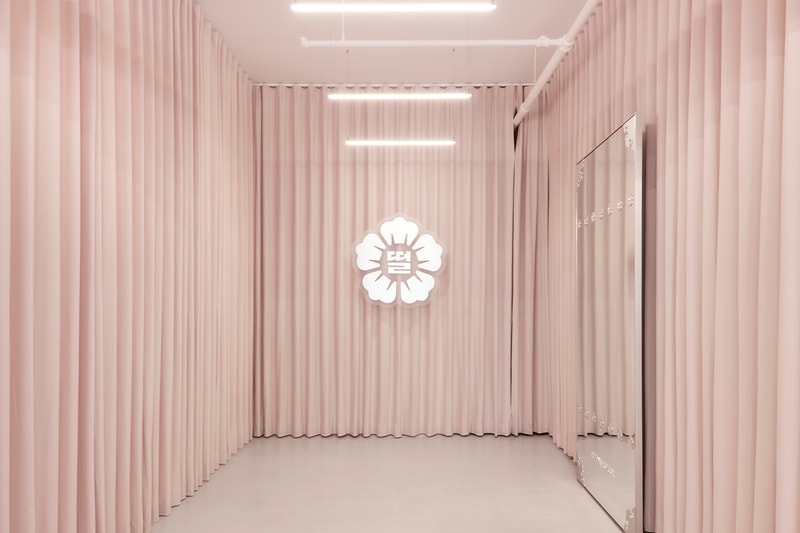
Sundae School, the Korean American lifestyle brand, launches its first permanent store in Manhattan's Chinatown this May. The 500-square-foot flagship at 117 Hester Street marks a major milestone for the eight-year-old independent label.
Designers Nohar Agadi and Andy Kim created a space inspired by traditional Korean Buddhist temples. Metal pillars, gates, and curtains guide customers through a sequential, meditative journey. The design philosophy transforms shopping into spiritual pause rather than commercial transaction.
The store stocks Sundae School's latest apparel collections alongside exclusive in-store pieces unavailable elsewhere. Beyond retail, the space functions as a community nexus for emerging indie brands, rotating pop-ups, and creative collaborators. This hybrid model reflects how independent fashion operates today. Retail becomes platform. Storefronts become galleries.
The Chinatown location carries symbolic weight. The neighborhood's multicultural identity aligns with Sundae School's Korean American positioning. The address sits within one of New York's most historically significant immigrant communities, grounding the brand in diaspora narratives and cross-cultural resilience.
Eight years of online-only operations positioned Sundae School as a digital-native label. The permanent store signals maturation without abandonment of indie ethos. The brand maintains its community-first approach while gaining physical presence.
This opening reflects broader retail trends. Independent fashion houses no longer view brick-and-mortar as obsolete. Instead, flagship stores serve as cultural anchors. They host community events, feature collaborators, and create Instagram-worthy environments that drive organic social media. Sundae School's temple-inspired design will inevitably generate significant cultural content.
The timing matters too. Korean fashion and culture maintain momentum in global consciousness. Brands like Maison Margiela and Dover Street Market have proven that New York audiences crave cu