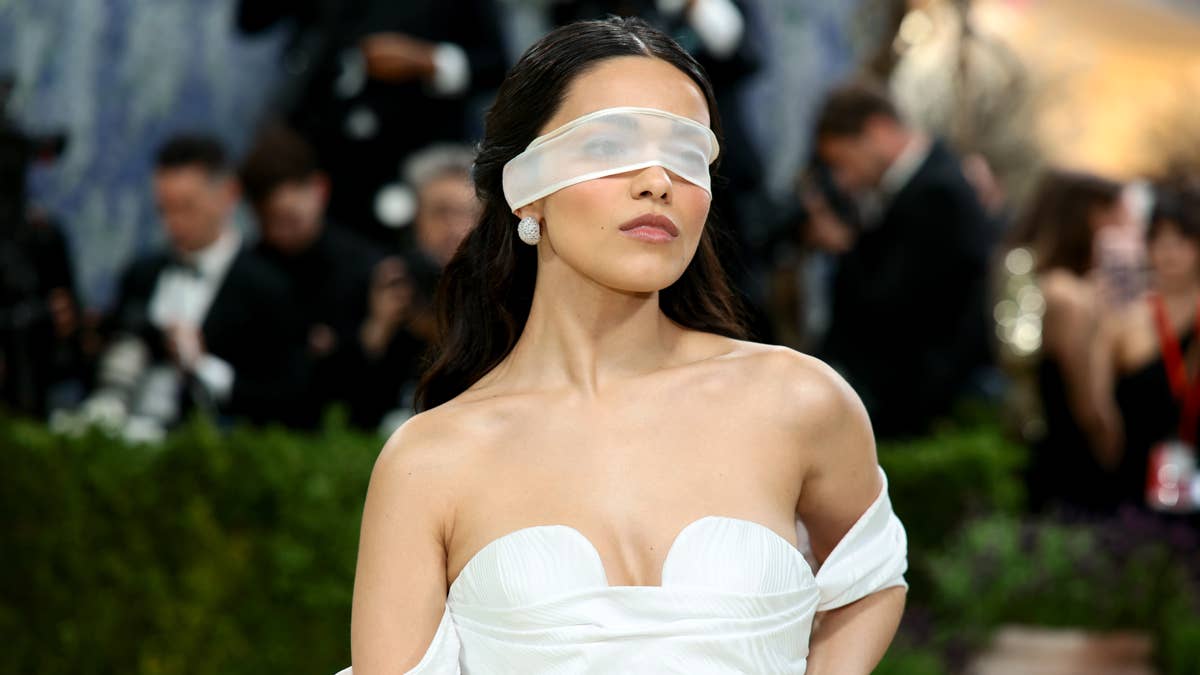
The 2026 Met Gala delivered art-historical fashion moments that transcended typical red carpet theatrics. Attendees turned the steps of the Metropolitan Museum into a gallery of wearable references, each look a direct conversation with canonical masterpieces.
Rachel Zegler channeled Paul Delaroche's "The Execution of Lady Jane Grey," the 19th-century painting depicting the doomed Tudor queen. Zegler's interpretation translated the canvas into fabric, capturing the painting's tragic romanticism through silhouette and color. The dress became a three-dimensional artwork itself.
Heidi Klum embraced sculptural transformation by embodying a living marble statue, complete with monochromatic styling and architectural construction. Her approach shifted the conversation from dressed-in-art to become-the-art, a bold statement on fashion's ability to collapse the boundary between body and sculpture.
Beyond these standouts, the night showcased designers thinking curatorially. Attendees referenced everything from classical portraiture to abstract expressionism, proving that high fashion and fine art exist on the same continuum. The looks demonstrated strategic research paired with technical execution. Stylists consulted museum archives. Designers studied composition, color theory, and historical context before translating inspiration into garment form.
This Met Gala distinguished itself through intellectual rigor. Rather than surface-level homage, attendees wore specific paintings and sculptures, naming their references through cut, texture, and silhouette. The approach required costume designers, fashion houses, and stylists to function as art historians first, designers second.
The evening reinforced the Met Gala's evolution from celebrity spectacle into haute couture exhibition space. When fashion draws directly from art canon, it stakes its own claim within that tradition. The 2026 iteration proved that the most compelling red carpet moments emerge when designers stop borrowing from art and start