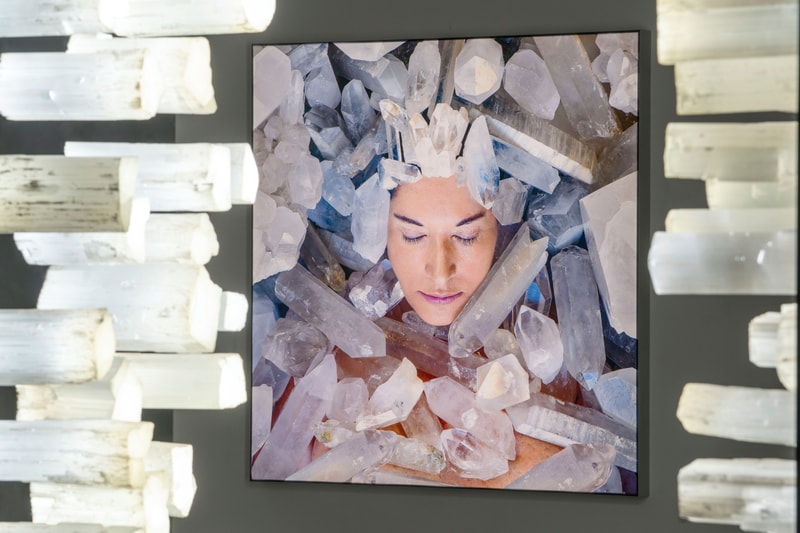
Marina Abramović opens "Transforming Energy" at Gallerie dell'Accademia in Venice, a landmark moment for the institution. The exhibition marks the museum's first major solo dedicated to a living woman artist, establishing Abramović as a pivotal figure in contemporary art history.
The show runs concurrent with the Venice Biennale, positioning Abramović's pioneering performance and conceptual works alongside Renaissance masterpieces. This juxtaposition challenges conventional museum hierarchies, placing twentieth and twenty-first century practice in direct conversation with the old masters. The exhibition features new performances, landmark pieces from Abramović's five-decade career, and her "Transitory Objects" series, which includes stone and crystal works exploring themes of transformation and spiritual energy.
Abramović's connection to Venice runs deep. The artist discovered the city as a teenager visiting the Biennale and returned repeatedly throughout her career, making this retrospective a full-circle moment. Her body of work spans endurance-based performances, interactive installations, and video pieces that have fundamentally reshaped how museums present living artists. Works like "The Artist Is Present" (MoMA, 2010) and her pioneering 1970s durational performances established protocols for documenting and preserving performance art within institutional spaces.
The Accademia's decision signals shifting curatorial priorities. Major encyclopedic museums increasingly spotlight living artists, particularly women whose contributions were historically marginalized. Abramović's retrospective arrives as institutions reckon with representation and canon formation in contemporary art.
The exhibition's timing during the Biennale maximizes visibility within Venice's art ecosystem. For Abramović, this solo legitimizes performance art within a traditionally conservative institution, cementing her legacy beyond the experimental galleries that first championed her work.
THE BOTTOM LINE: Abramović's Acc