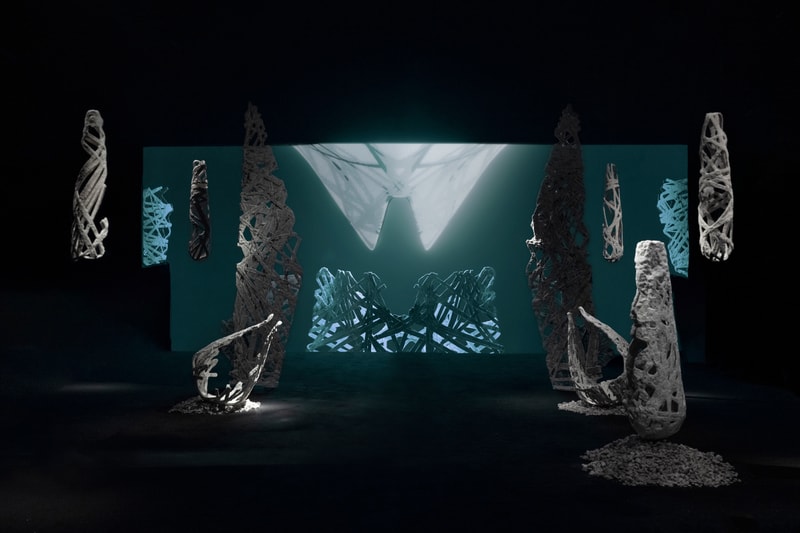
Sruli Recht opens "LAIR" at the SWCAC museum in Shenzhen, unveiling an immersive exhibition born from 15 years of experimental material manipulation. The Israeli designer presents 68 sculptures across 11 installations that blur the boundary between craft and natural geology.
Recht's methodology abandons conventional fashion production. He employs volcanic lava casting, lightning-formed glass, and bee-skin fur to create objects that mirror Earth's own formation processes. Rather than impose design onto materials, Recht orchestrates conditions that allow nature and human intervention to collaborate. Each piece emerges from raw elemental forces: geological shifts, chemical reactions, and biological transformation.
This approach extends Recht's broader design philosophy, which has long questioned the distinction between maker and material. His previous work explored similarly unconventional techniques, but "LAIR" represents the culmination of a decade-and-a-half investigation into what happens when designers relinquish total control.
The Shenzhen location carries weight. The manufacturing hub sits at the opposite end of the supply chain from Recht's labor-intensive process. While Shenzhen symbolizes mass production and efficiency, Recht's work demands time, waste, accident, and unpredictability. The contrast sharpens the exhibition's central provocation: that handmade objects grown through natural processes offer an entirely different relationship to material and meaning than industrially optimized goods.
The 11 installations function as environments rather than discrete objects. Visitors move through spaces activated by Recht's sculptures, experiencing how form emerges from constraint and collaboration with elemental forces. Bee-skin fur, volcanic castings, and lightning-struck glass each carry the record of their own creation, visible in surface texture and structural variation.
"LAIR" positions Recht among designers questioning technological