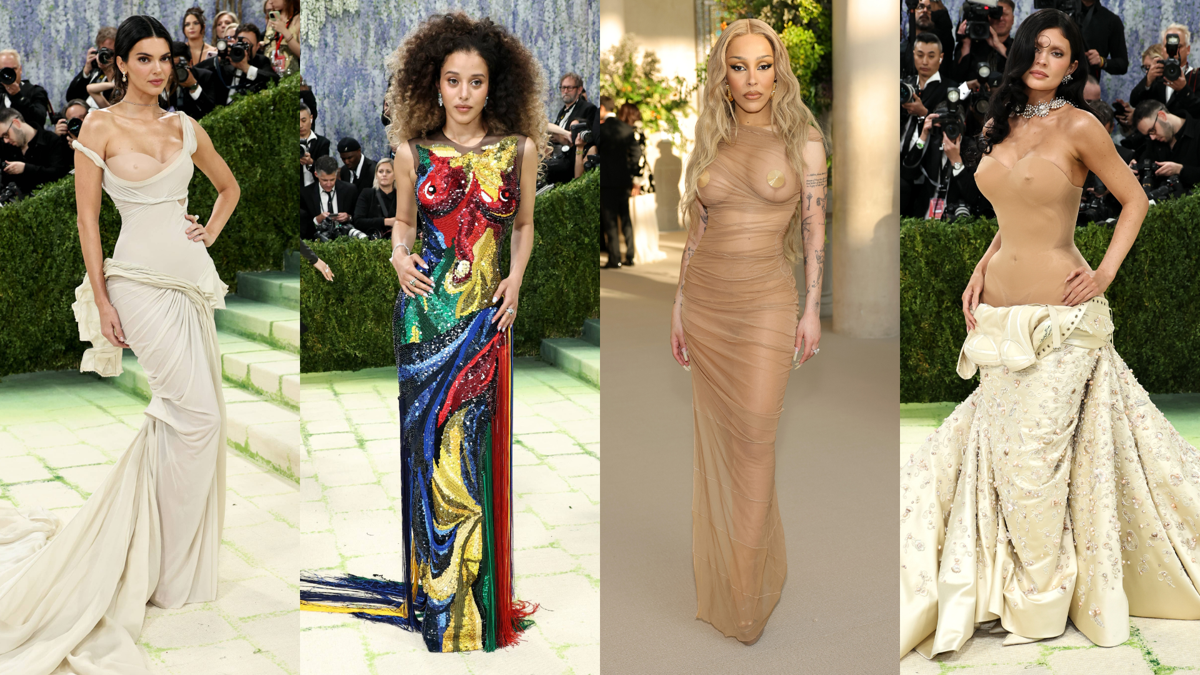
The 2026 Met Gala embraced audacious chest-focused aesthetics as designers deployed trompe-l'oeil breast renderings, sculptural bust-shaped bodices, and provocative artistic interpretations across the red carpet. The theme encouraged fashion's boldest voices to translate body art into wearable statements.
Designers treated the torso as canvas. Constructed silhouettes featured moulded breast forms integrated into evening wear, while trompe-l'oeil techniques created optical illusions of exposed skin and anatomical detail. The approach married high craft with provocative aesthetics, positioning the body as sculpture rather than commodity.
This direction signals fashion's continued conversation around the female form. Rather than concealment, the evening celebrated representation through artistic reinterpretation. Designers moved beyond traditional coverage into territory that examines how bodies exist in art history, museum contexts, and contemporary fashion discourse.
The chest-centric theme reflects current runway conversations about embodied design. Contemporary fashion increasingly interrogates nudity, presentation, and the politics of exposure through conceptual frameworks. The Met's staging provided institutional validation for silhouettes and concepts that push beyond mainstream comfort zones.
The evening demonstrated fashion's appetite for intellectual provocation paired with technical precision. Constructed bodices demand exceptional tailoring and pattern work. Trompe-l'oeil rendering requires artistic skill and material knowledge. The red carpet proved these techniques command serious design attention rather than serving shock value alone.
This aesthetic trajectory influences retail and runway immediately. Luxury houses from Schiaparelli to emerging conceptual designers now explore similar territory. The Met's platform legitimizes chest-focused design language for seasons ahead, opening space for brands to develop collections around sculptural bodice work and body-as-art concepts.
The evening's coherence around a single anatomical focus marks a departure from fragmented, individualistic Met