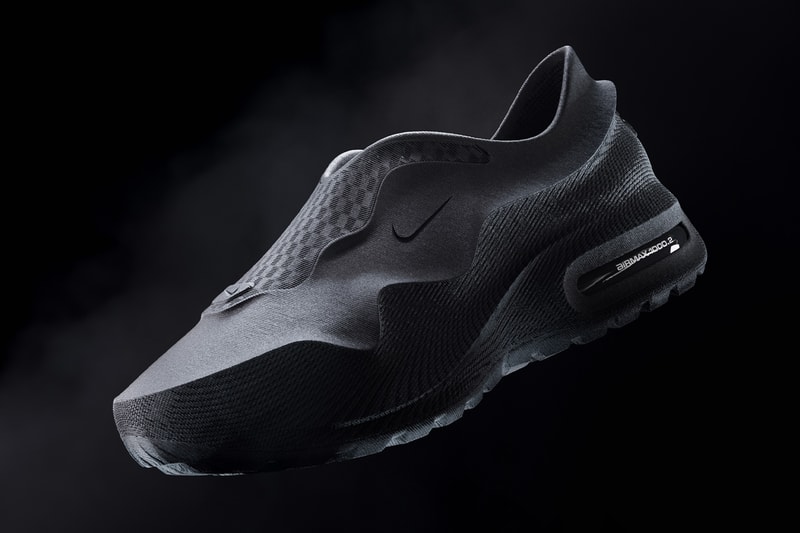
Nike and Zellerfeld expand their partnership with the AirMax 1000.2, a 3D-printed sneaker that treats footwear design like software iterations. The "Black/Black" colorway ships with structural upgrades, including refined lug patterns and shape refinements that accelerate production without compromising wearability.
The collaboration marks a shift in how Nike approaches Air Max construction. Rather than wholesale redesigns, the partnership focuses on incremental improvements that balance manufacturing efficiency with comfort. This philosophy positions 3D printing not as a gimmick but as a legitimate production method for scaled releases.
The timing matters. Nike launches its "Air Works" program this May, inviting global designers to Nike HQ for co-creation sessions centered on 3D-printed Air Max futures. The initiative signals that this partnership transcends one-off drops. Nike is building institutional infrastructure around the technology.
Zellerfeld's involvement underscores Nike's commitment to outsourcing expertise rather than building in-house. The 3D-printing specialist handles the technical heavy lifting. Nike owns the distribution, the brand, and the design direction. It's a smart move for a corporation moving faster than its own R&D typically allows.
The sneaker arrives in May.