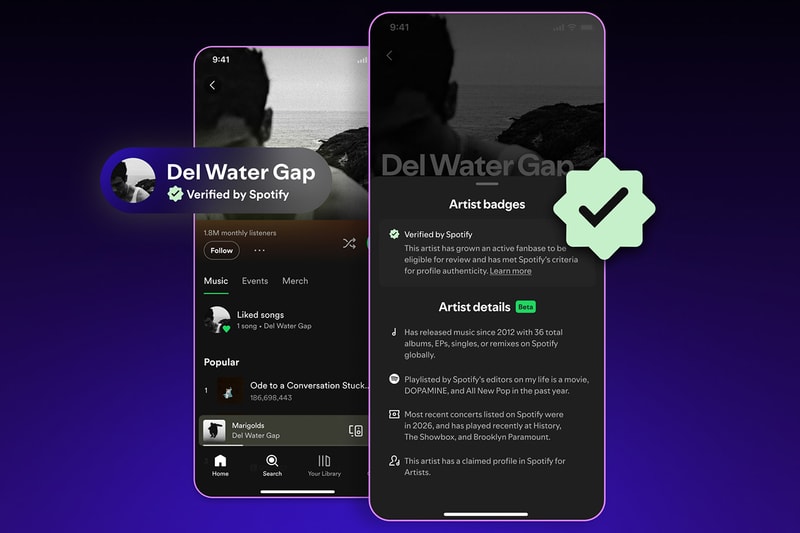
Spotify launches a verified badge system to separate human artists from AI-generated music flooding the platform. The green checkmark creates a visual hierarchy that prioritizes authentic creators over algorithmic content. The move marks a decisive shift in how the streaming giant handles commercial visibility as the music industry battles an explosion of low-quality AI tracks.
The verification badge establishes a clear standard for human authenticity in an ecosystem increasingly saturated with machine-generated audio. Spotify's decision reflects mounting pressure from industry stakeholders who view AI slop as a threat to legitimate artists and platform credibility. The system doesn't ban AI music outright. Instead, it uses transparency and visual distinction as the filtering mechanism, letting listeners make informed choices about what they stream.
This approach signals a broader reckoning across tech platforms grappling with AI-generated content. Rather than outright prohibition, Spotify opts for curation through labeling. The verified badge becomes currency for real artists competing against the noise of algorithmic production. The initiative directly addresses a problem that has intensified over recent years as music production tools democratize. Spotify essentially draws a line: human creativity gets official endorsement. Everything else remains unmarked and, by extension, less visible in algorithmic recommendations.